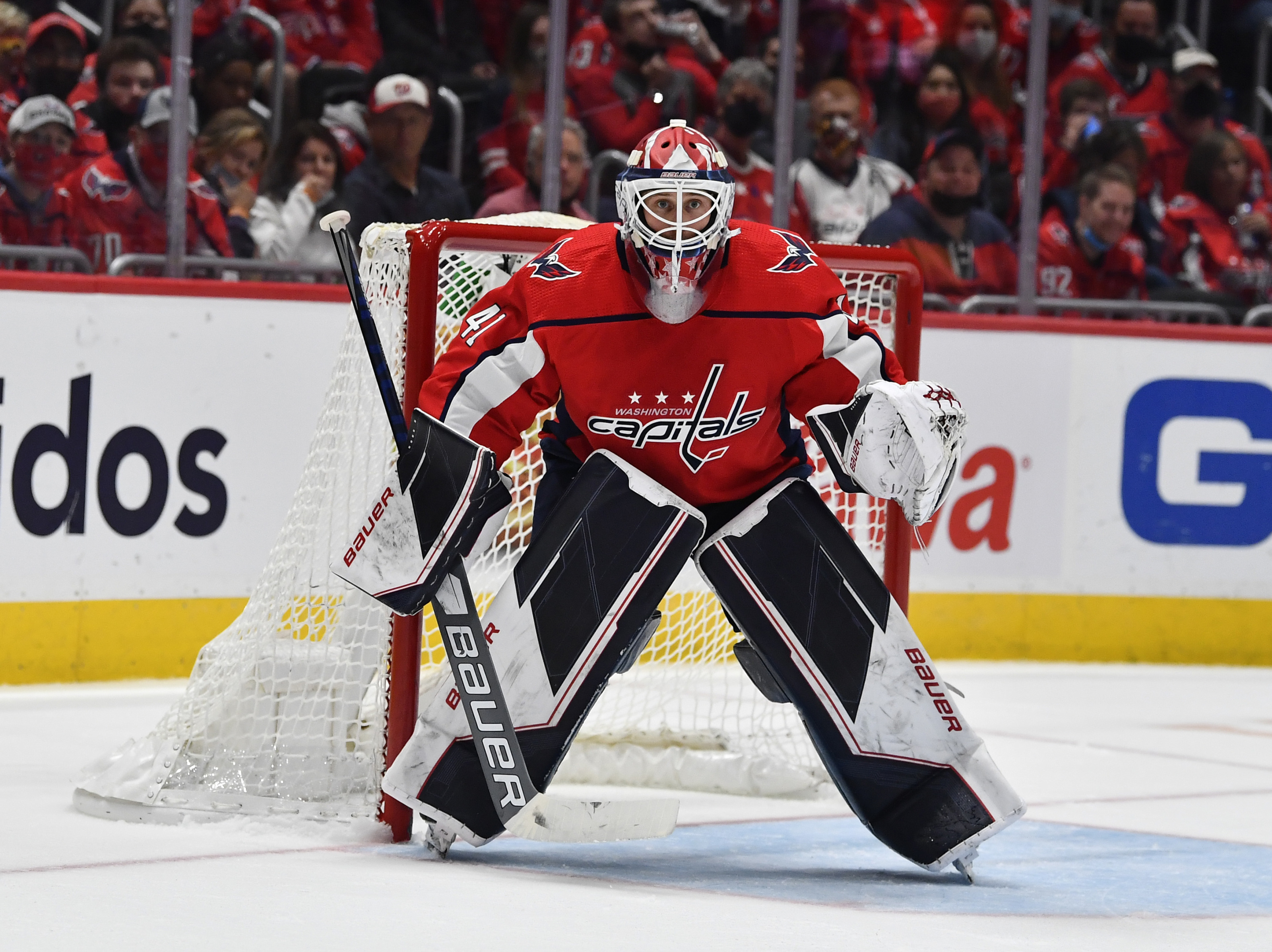
Ilya Samsonov
“Long-term consistency trumps short-term intensity.”
-- Bruce Lee.
If one was to play a game of word association about the
Capitals, and one said “Ilya Samsonov,” the word most often associated with him
might be “inconsistency.” He has yet to play in 100 games in his career to
date, but consistency in performance over time has eluded him. His early career win-loss record resembles
that of his predecessor, Braden Holtby – 52-22-8 in 89 games to 51-28-6 in
Holtby’s first 89 games, but his performance numbers lag – 2.81 goals against
average, .902 save percentage, six shutouts compared to 2.57/.919/nine shutouts
in Holtby’s first 89 games.
Fearless’ Take… Samsonov thrived in high-workload
situations, going 9-4-3, 2.93, .919, with one shutout when facing 30 or more
shots on goal.
He also demonstrated an
ability to win on the road, going 14-6-3, 3.00, .906, with two shutouts.
He was 8-2-2, 2.84, .924, with one shutout in
12 road games in which he faced at least 30 shots.
Cheerless’ Take… In an 82-game season, some games matter
more than others, and by two measures Samsonov had issues. Against the Metropolitan Division he was
8-6-1, 2.82, .901. Against playoff teams
he was 9-6-2, 3.47, .889, with one shutout.
He was successful in a win-loss sense in facing these groups, but it
seemed to be more as a passenger than as a goalie who consistently led the Caps
by virtue of his performance.
Odd Samsonov Fact… Only once did this season did Samsonov
string together at least three consecutive games with save percentage of .900
or better. Over a five-game stretch from
November 28th to December 10th, he was 3-2-0, 2.78, .916.
Odd Samsonov Fact II… In 89 career games, Samsonov recorded
a save percentage under .900 43 times (43.8 percent). Of 25 Caps goalies to play in at least 50
games for the team, that ranks as the 14th highest share of sub-.900
games to total games played, but among the eight goalies to play at least 50
games for the Caps since the 2004-2005 lockout season, his is the highest share
of sub-.900 games.
Odd Samsonov Fact III… There were 27 goalies to win at least
20 games this season. Only two – Dallas’
Jake Oettinger and Boston’s Jeremy Swayman – were younger, and of the two, only
Oettinger won more games (30; Samsonov and Swayman finished with 23 wins).
Game to Remember… February 1st at
Pittsburgh. It is not often a three
goals allowed performance would be a game to remember, but this one was special
for Samsonov. It was a strange game that
started with the Caps scoring first, a shorthanded goal by Nic Dowd 5:50 into
the game. The Penguins came back,
scoring a pair of power play goals five minutes apart in the first period. The Caps tied the game late in the first
period on, yes, another power play goal, this one by Dmitry Orlov. Pittsburgh regained the lead early in the
second period on Bryan Rust’s second power play goal of the game and the fifth
of five goals scored by both teams on special teams. The Caps tied the game in the last minute of
the second period on a Daniel Sprong goal, and this would end the scoring in regulation. The Caps won the game in overtime when Orlov
scored his second goal of the game in the last minute of the five-minute
overtime.
As for Samsonov, he was not even the scheduled starter.
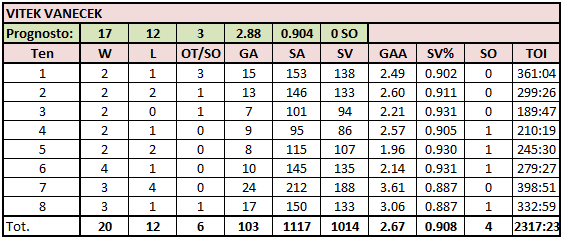
Vitek Vanecek started the game but lasted just 6:23 before he was run over by
Kasperi Kapanen, allowing one goal on two shots. In relief, Samsonov did not allow an even
strength goal, stopped 43 of 45 shots overall and stopped the last 25 shots he
faced over the last 39:33 of regulation and overtime. He was magnificent in the second period,
stopping 22 of 23 shots. And what is
more, his performance ended a personal four-game losing streak (0-3-1) in which
he posted a 3.84 goals against average and a .876 save percentage.
Game to Forget… February 2nd vs. Edmonton. What February 1st giveth, February
2nd taketh away. The night
after his sublime performance against the Penguins, he laid an egg against the
Edmonton Oilers. Four shots faced, three
goals allowed, 5:07 in ice time. It was the earliest exit of his career. The less
said about it (and the Caps dropping a 5-3 decision), the better.
Postseason… It was more of the same from Samsonov in the
postseason. In five games, for the most
part, he was either very good (twice posting save percentages over .950, although
one was in a 20-minute effort) and two with save percentages under .875. His 1-6, 2.98, .907 career postseason numbers
need to improve.
Looking Ahead… Samsonov is an arbitration-eligible restricted
free agent. His entry level contract
carried a $1.475 million cap hit. Does
he merit a raise? Consider that his base
salary under that deal was $832,500 a year.
He is not likely to sign a deal at that level, but a raise over his
total compensation of $1.475 million would be risky, given his inconsistency in
performance to date. He will be 26 years
old in February, and although he got something of a late start to his career in
North America (he was drafted in 2015 but did not play his first game for
Hershey in the AHL until 2018-2019), age should not be a factor in this point
in evaluating his performance, especially from a consistency standpoint. How the Caps evaluate his potential progress
in that area will go a long way, not only to determining a compensation level,
but whether the team actively seeks to move him in the off-season.
In the End… Ilya Samsonov is a goalie of considerable
skill. When he is on his game, he is
among the most effective goalies in the league.
But the problem is that he is not “on his game” enough, from
game-to-game, and sometimes in a period-to-period perspective. Effective veterans seem to avoid the high “highs”
and the low “lows.” They make the saves
they are supposed to make, make many the have no business making, and can put
their teams on their backs for stretches and steal games. Samsonov is not yet that goaltender, and the
clock is ticking on his development to that level of performance.
Grade: B-minus