Sunday, February 24, 2013

Washington Capitals: That Was The Week That Was -- Week 5

It was a light week, game-wise, with only two contests on the schedule, but it was chock full of twists and turns.  And when it was over for the Washington Capitals, they were worse off than when they started the week, despite jumping a spot in the standings.  They started the week five points out of a playoff spot and finished it six points behind.


Record: 1-1-0

It was six periods of hockey against the New Jersey Devils this week.  If you look at it that way, the Caps “won” the week by a 7-4 margin.  Unfortunately, this was not a two-game, total goal series.  If you look at things period by period, the Caps “won” the week with a 2-1-3 record over six periods.  Unfortunately, the NHL does not award standings points by period.  No, the Caps lived and died – well, won and lost, actually – by the 60 minute game.  They lost a third period lead in Game 1 of the week, allowing a pair of goals in a 3-2 loss to the Devils.  They took and held a third period lead in Game 2 of the week, a 5-1 win. 

Offense: 3.50/game (season: 2.82 / rank: 12th)

The best you could say about the Caps offense this week is that it was patient.  And yes, that is intended as a compliment.  Washington had no goals on a total of 15 first period shots over the two games against the Devils.  The two first periods differed in type, too.  In Game 1 the Caps managed only four shots on goal against New Jersey, while in Game 2 they recorded 11 first period shots on goal. 

Things got better from there, though.  In the second period, which has been a problem for the Caps this season, Washington outscored New Jersey, 3-2, leaving the Caps either ahead (in Game 1) or tied (in Game 2) at the second intermission.  Against a team that squeezes the opponent and the clock over 60 minutes, neither was a bad outcome.  It denied the Devils the luxury of falling back into a prevent defense.

What the Caps did in Game 2 that they could not in Game 1 was close the deal.  They scored four goals on 10 shots over a 16:46 span of the third period of Game 2, three of them on special teams (two power play goals and a shorthanded goal to go with an even-strength score).  Of course, the problem in Game 1 was not so much offense as much as it was quick-stepping to the penalty box, which brings us to…

Defense: 2.00/game (season: 3.24 / rank: 26th)

There was the good and the bad in Game 1 of the week.  The bad first – six minor penalties in the third period, four of them of the obstruction sort (holding, tripping, hooking, interference).  Say what you want about the officiating, but there was a consistent theme that the Caps were a half-step behind.  If anything the Caps were better defensively when a man down in that third period.  At even strength the Caps were outshot 10-3 in the third period of Game 1 (30-12 for the game at even strength).

Game 2 was a different story.  The Caps allowed the Devils only 17 even strength shots for the game and only three of those by the trio of Ilya Kovalchuk (2), Patrik Elias (1), and David Clarkson (0), who came into the game with a combined 21 goals of the total of 45 scored by the Devils.  Kovalchuk scored on one of his even strength shots, tying the game in the second period on a defensive breakdown by the Caps, but otherwise this trio was not heard from at 5-on-5.  It was a much better effort.

Goaltending: 2.03 / .932 (season: 3.24 / .897)

It was Braden Holtby’s week, and he had a fine one.  He stopped 45 of 47 shots at even strength (.957 save percentage), and even his save percentage on the penalty kill (.909) was excellent (it is a small population of saves but the percentage is exceeded only by five goalies who have appeared in at least five games).  By period he was sturdy, going 18-for-18 in the first period and 20-for-22 in the third period of the two games.  Even the 17-for-19 record in the second periods this week was not bad (.895), in the context of his overall season save percentage entering the week (.888).  He gave the Caps a chance to win Game 1 of the week (before the parade to the penalty box) and kept the Caps engaged with the Devils until the power play allowed the Caps to shake New Jersey off in the final frame.

Power Play: 4-7 / 57.1 percent (season: 28.8 percent / rank: 2nd)

If you go 50 percent for a game, it is a good game.  If you go better than 50 percent for the week, you are on a run.  If you go 50 percent on the power play over 25 periods of hockey – more than eight games – you are pretty good.  The Caps finished the week with all of those statements being true, going 2-for-4 in Game 1 of the week, 4-for-7 for the week as a whole, and 12-for-24 over their last 25 periods of hockey as the week came to a close.

Penalty Killing: 8-9 / 88.9 percent (season: 77.0 percent / rank: 23rd)

There is no clearer indicator of wins and losses for the Caps than their performance on the penalty kill.  Coming into the week they were 1-7-1 when facing more than three shorthanded situations, 4-2-0 when they faced three or fewer.  They were 0-8-1 when allowing a power play goal, 5-1-0 when they did not.  And sure enough, the Caps lost the game in which they faced more than three power plays; they lost the game in which they allowed a power play goal.  They won the game in which they were perfect on the penalty kill; they won having allowed only three power play opportunities in that game.  Having to kill five power plays in the third period did them in, in Game 1.  The Caps simply spent too much time (almost eight minutes in all, including 2:28 in 3-on-5 time) killing penalties to develop any rhythm at the other end of the ice, and it provided New Jersey with too many opportunities for what would eventually be a tie-breaking goal in a 2-2 game.

Paying the Price: 55 hits / 31 blocked shots (season rank: 21st / 21st)

Going into the week’s play the Caps were averaging only 11 hits a game at home.  They more than doubled that in two games this week, averaging 27.5 a game.  Alex Ovechkin got his (nine in two games), but Matt Hendricks got his, too (eight in an average of 27:40 of total ice time).  But the number that might be most (or in a way, least) significant in the hits department  is “5.”  The Caps had five players with at least four hits in Thursday’s game… and lost.

Faceoffs: 74-for-126 / 58.7 percent (season: 50.8 percent / rank: 11th)

The Caps won all three zones for the week.  They were especially efficient in the defensive end, going 26-for-43 (60.5 percent).  It enabled the club to climb over 50 percent for the season.  The surprise was not that Mike Ribeiro and Nicklas Backstrom went 11-20 in the offensive end, or even that Backstrom and Jay Beagle went a combined 16-for-23 in the defensive end.  It was probably that Mathieu Perreault continued his improvement in the circle, going 12-for-19 (63.2 percent) to finish the week at 56.1 percent for the season (third on the team).  He gets some measure of protection in this regard (10 of his 19 draws came in the neutral zone), but possession is possession, and it is better to have it than not.

Turnovers: minus-5

The 23 giveaways stood out this week, especially since New Jersey was charged with only 11 combined for the two games.  But there were only eight giveaways by defensemen, perhaps a reason why the Devils did not have a lot of opportunities in the two games this week. 

In the end...

It was a nice finish to the week, especially getting the Captain untracked (a hat trick and four points in Game 2 for Alex Ovechkin), but that is not what the Caps need now.  They need “nice weeks” – plural.  They have one winning week in their first five, and the Caps sill have only one streak of consecutive wins this season (the three game streak from February 9-14).  They leave the Devils – the only team in the top eight the Caps have defeated this season – behind to take on three teams this coming week that are not among the league’s elite.  Of this week's opponents, only Carolina is in the top-eight, but as a group the Hurricanes, the Jets, and the Flyers went 7-5-0 this past week (Winnipeg and Philadelphia each went 3-1-0).  The Caps can either use their “nice finish” of the week as a springboard to a run of success, or they can lose contact altogether with the top-eight…if they haven’t already.

A TWO-point afternoon -- Game 17: Capitals 5 - Devils 1

And sometimes, it all comes together.

So it did on Saturday afternoon as the Washington Capitals defeated the New Jersey Devils, 5-1.  The big story, of course, was Alex Ovechkin recording his first hat trick of the season… first multi-goal game since March 23rd of last season… first hat trick since January 22, 2011… first hat trick at home since February 7, 2010…

Enough of the “first since” stuff, okay?

It was actually a case of the hockey gods rewarding Ovechkin for playing with an intensity over the last few games that was not there earlier in the year.  He averaged more than five shots on goal per game over his previous nine games, but had only three goals to show for it.  He matched that goal total in seven shots on goal on Saturday afternoon.

Ovechkin did it in familiar ways but by new means, beginning in the second period.  His first goal started on a rush down the right side – not his customary left side – when he took a breakout pass from John Erskine.  Then Ovechkin left the puck for Jason Chimera at the Devils’ blue line before drifting off to the left side in the New Jersey zone. Chimera laid the puck off to Mike Ribeiro, by which time Ovechkin set up camp in the left circle.  He needed only to one-time the pass from Ribeiro past goalie Johan Hedberg, and the Caps had a 1-0 lead.

After Ilya Kovalchuk knotted the game late in the second period, Ovechkin grabbed the lead back for the Caps early in the third.  Matt Hendricks sent a long cross-ice pass to Ovechkin, again heading down the right wing.  After crossing the blue line he used defenseman Anton Volchenkov as a screen – how many times have we seen that on the other side – and rifled a wrist shot past Hedberg on the long side.

Less than three minutes later Eric Fehr scored a shorthanded goal, then it was Ovechkin’s turn again.  On a power play, after missing a one-timer from the left wing circle, Ovechkin recovered his own shot to reset the offense.  His cross-ice pass missed its mark, but John Carlson flagged it down at the blue line.  Carlson to Nicklas Backstrom at the right wing wall, to Ribeiro at the goal line, out to Ovechkin at the edge of the left wing circle – bang… back of the net.

He was not done, though. On another Caps power play, the threat of his shot seemed to occupy Hedberg as a pass came to him in the left wing circle from Tomas Kundratek.  This time, though, Ovechkin one-timed a pass to Troy Brouwer in the slot,  Brouwer redirected the shot through Hedberg’s legs before Andy Greene could tie him up, and the Caps had their final 5-1 margin.

Other stuff…

-- Going 2-for-3 on the power play means that the Caps are 12-for-24 (50.0 percent) going back to the third period of their game against Pittsburgh on February 3rd, covering eight-plus games.  Whatever the Caps’ problems have been, the power play is not among them.  They are now second in the league overall at 28.8 percent.

-- All of a sudden, Alex Ovechkin is in the top-15 in goals scored (tied for 14th, actually).  Mike Ribeiro, who had two assists, is now tied for sixth in helpers and tied for ninth in points.

-- It was the best of $600,000 signings, it was the worst of $600,000 signings.  Eric Fehr picked goalie Johan Hedberg’s pocket with hustle to score a wrap-around shorthanded goal to give the Caps some insurance in the third period.  That makes four goals on just 18 shots in 14 games for Fehr.  He is fifth on the team in goals scored and sixth in points now, despite averaging barely ten minutes a game in ice time.

-- As for that “worst” part, it might be a bit unfair to characterize Wojtek Wolski’s signing as “worst,” but he is really in a rut.  He couldn’t finish a play with an open net in front of him, five feet away.  The puck might have been bouncing on him, but like a baseball hitter who is in a slump and squeezing the bat too tightly, there was Wolski flipping the puck wide of the net.  He is now without a point in his last seven games and is a minus-3.

-- If Ilya Kovalchuk is standing at center ice waiting to take a penalty shot, a goalie might be concerned (he was 11-for-14 in trick shots last season, if you need a comparison).  If it is Patrik Elias staring down at the goalie, it will get the goalie’s attention (Elias was 6-for-12 in Gimmicks last season).  Steve Bernier?  He was 1-for-4 in shootouts over a seven year career coming into this season.  It is not his forte.  He skated in on his penalty shot, pretty much telegraphed going five-hole all the way, and all goalie Braden Holtby had to do was the ol’ knee-dip with his right pad, and that was that.

-- Yup… John Carlson was on ice for another goal against.  Not really his problem, though.  He had Andrei Loktionov covered on his side as Ilya Kovalchuk slipped into a void created when John Erskine slid over to cover…Loktionov.  Huh?  By the way, that scoring play – Kovalchuk from Loktionov and (Alexei) Ponikarovsky – is the season leader for letters used in a scoring line.

-- Ovechkin had quite the line on his score sheet.  In addition to the three goals  and the assist he had seven shots on goal (tied a season high), twn shot attempts, and five hits.

-- Ovechkin did not lead the team in hits, though.  That would be Matt Hendricks, who had six in less than 13 minutes of ice time.  And, he chipped in an assist to boot.

-- With his goal, Troy Brouwer has points in nine of his last 12 games and is 7-4-11 over that span.

-- Part of the charm of playing goaltender for the New Jersey Devils is not having to face a heavy workload on most nights.  Johan Hedberg faced only 26 shots, but it was actually Braden Holtby who was the beneficiary of a lighter workload in this game.  Holtby faced only 22 shots, seven in the third period as the Caps were abusing Hedberg at the other end. 

-- The Caps were consistent in the circle.  Twelve faceoffs won in the offensive end, 12 in the defensive end, and 12 in the neutral zone.  All with winning percentages.  The “offensive” guys – Nicklas Backstrom and Mike Ribeiro – were a combined 7-for-12 in the offensive end.  The “defensive” guys – Matt Hendricks and Jay Beagle – were a combined 5-for-7 in the defensive zone.  And there was Mathieu Perrault going 8-for-10 overall.  Whodathunkit?

-- Speaking of faceoffs, Andrei Lokitonov was 0-for-10 for the Devils.  Geez, you’d think a guy would win one by accident.

In the end, one could consider this the best game the Caps have played this year, given their opponent.  It was the first time the Caps beat a team in the top-eight in the conference, and they did it after what might have been a disheartening loss to the same club in the third period less than 48 hours earlier.  They got a big game from their big game player.  They got solid goaltending.  They had a crisp power play.  They had an effective penalty kill.  They now get a chance to take a bite out of a divisional opponent when Carolina visits on Tuesday before heading out on the road.  Time to put a streak together.

Saturday, February 23, 2013

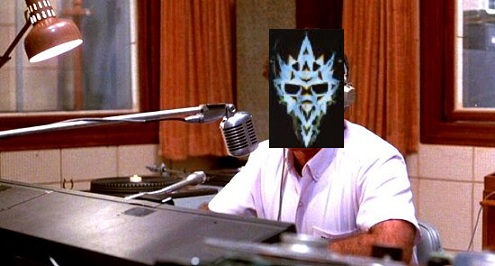
The Peerless Prognosticator is ON THE AIR!!! - Game 17: Devils at Capitals, February 23rd

The Peerless Prognosticator is ON THE AIR!!!


Go-o-o-o-o-od morning, Wash-ing-ton!

Hey, this is not a test. This is rock and roll. Time to rock it from the White House ‘cross the DMV! Is that me, or does that sound like a Bill Clinton speech?  Hey, DMV…. Oh, hey, DMV. DMV me, DMV me. Why don't they get a rope and impeach me?

Hey, is it a little too early for being that loud? Hey, too late. It's 0600. What's the "0" stand for? Oh, my God, it's early. Speaking of early, how about that Cro-Magnon, Marty Dreiwitz? Thank you, Marty, for "silky-smooth sound." Make me sound like John Boehner!

Wrong speed. We've got it on the wrong speed. For those of you worried about sequestration, that's gonna sound just right. Let's put her right back down. Let's try it a little faster, see if that picks it up a little bit. Those Tea Partiers are going, "I really like the music. I really like the music. I really like the music." Oh, it's still a bad speech.

Hey, wait a minute. Let's try something. Let's play this backwards and see if it gets any better. “Obama is a devil.” yeff-yiv-yeee… “Obama is a devil.”

Picture a man going on a journey beyond sight and sound. He's left the real world. He's entered the Senate Chamber. All right. Hey, what is this "Senate Chamber"? What do they mean, "World’s Greatest Deliberative Body"? Sounds like a couple of cops in Dupont Circle, "You know, she looks pretty to me." Hey, whatever it is, I like it because it gets you on your toes better than a bowl of Ben’s chili.

What is a deliberative body? Sounds like something out of The Wizard of Oz, Oh, no, don't go in there. Oh-we-oh Har-ry Reid.  Oh, look, you've landed in the Senate. You're among the little people now. We represent the big oil money… the big oil money… the big oil money.  Oh, no! Follow the campaign check trail. Follow the campaign check trail. "Oh, I'll get you, my pretty!" Oh, my God. It's the wicked witch of the north. It's Mitch McConnell! "Now, little Democrat, you and your little 'filibuster' too!"

"Oh, Peerless. Peerless. What are you doing, Peerless?" Oh, Hannity, you hack. You've been down on everything but the Keystone Pipeline. Stop it right now.

Hey, uh, hi. Can you help me? What's your name?

"My name's Albert E. Albert."

Albert, what town do you represent?  

"I represent Mother Earth."

Well, thank you, Albert. What's the weather like out there?

"It's hot. Damn hot! Real hot! How’s THAT for an inconvenient truth?!"  

Well, can you tell me what it feels like.

"Fool, it's hot! I told you again! Were you born on the sun? It's damn hot! It's so damn hot, I saw little guys on K Street, their $1,500 suits burst into flames. It's that hot! Do you know what I'm talking about."

What do you think it's going to be like tonight?

"It's gonna be hot and wet! That's nice if you're with a lady, but it ain't no good if you're on the Mall."

Thank you, Albert. Here's a song coming your way right now. "Nowhere To Run To" by Martha and the Vandellas. Yes! Hey, you know what I mean!

Too much?

***** 

Maybe it is too much, but then again, maybe now the New Jersey Devils are out of bed and feeling a little groggy.  It can only help, because for the Washington Capitals it is like the song says, “nowhere to run to.”  They are in 15th place in the Eastern Conference, 30th in the NHL.  There is no longer anywhere to run to.  They have to win… now… today.  And Tuesday.  And Wednesday.

But today at high noon they get the New Jersey Devils in the second half of their double-header at Verizon Center.  We covered the particulars in the prognosto on Thursday, so let’s get right to the keys…

1.  Be Better at Even Strength.  The Caps were outshot, 30-12, at even strength on Thursday.  They have been outscored, 35-26, at 5-on-5 this season.  They have been outscored, 3-1, by the Devils in their two meetings so far this season.  Be better at even strength.

2.  Stay out of the box.  The Caps are 24th in penalty killing this season.  Only seven teams have found themselves shorthanded more often.  That’s a really bad mix.  What it means is that only Detroit has allowed more power play goals than have the Caps.  They have not won a game in regulation when allowing the opponent more than three power play opportunities. While they are 10-12 in penalty killing against the Devils in two games, the problem number there is “12.”  Too, too many opportunities.

3.  Memory loss.  The Caps are the only team – the only team – in the NHL that does not have a winning record when leading after two periods.  If they get a lead after 40 minutes, maybe they need to forget the good stuff that got them there and treat the third period as 0-0.  Stay thirsty, my friends… for wins.

Capitals 3 – Devils 2

Thursday, February 21, 2013

A NO-point night -- Game 16: Devils 3 - Capitals 2

If you were to sneak into Verizon Center right about now, you would probably see a burly young man in a red jersey sitting in the penalty box. Surely there has to be another penalty in there.

The Washington Capitals took a lead into the third period, but marching to the penalty box with the precision that would make John Philip Sousa proud (if not head coach Adam Oates or the players), the Caps had six shorthanded situations to kill off.  They would kill off five of them, but the sixth one did them in as the Devils skated off with a 3-2 win in the first half of the two-game set at Verizon Center this weekend.

The Caps had trouble defending on special teams in this one at both ends of the ice.  The Caps opened the scoring mid-way through the second period when Mathieu Perreault stuffed a rebound of a Troy Brouwer shot past Devils goalie Martin Brodeur.  But less than two minutes later the Devils tied it on a Caps power play when Adam Henrique stripped John Carlson of the puck behind the Caps’ net, then after taking a return pass from Patrik Elias, fed Elias going to the net for the shorthanded equalizer.

Barely a minute after that the Caps converted their power play.  Mike Ribeiro gave the Caps the lead once more when he kicked the puck onto his stick, spun, and fired from the slot past Brodeur.  When the Caps took that 2-1 lead into the locker room after 40 minutes, it looked pretty good.  The Caps were 3-2-0 when leading after 40 minutes, while the Devils were 0-3-1.

Then the referees found their whistles. 

Having taken only an inconsequential holding penalty by Mathieu Perreault in the first period, which the Caps killed off, the Caps would be whistled for six minor penalties in the third period in the space of 9:35.  Six different players were sent off for six different kinds of infractions.  Twice the Devils had 5-on-3 advantages for a total of 2:28 and yet managed only two shots on goal.  It was the second of those shots at 5-on-3 – a rocket of a one-timer from Ilya Kovalchuk – that broke a 2-2 tie (Andrei Loktionov having tied the game earlier in the period) and provided the winning margin.

Other stuff…

-- Ilya Kovalchuk was a monster for the Devils.  In addition to the game-winning goal, Kovalchuk skated 28:58 in ice time (including a 3:52 shift when the Devils were on one of their extended power plays), had seven shots on goal, 14 shot attempts, and he was on the ice when the Devils were defending against an extra Capitals attacker over the last 1:22 of the game.

-- His score sheet would not shine as bright as Kovalchuk’s, but Alex Ovechkin played with an intensity that has been largely absent from his game this season.  He was the “bull in the china shop” once more, with four hits of an enthusiastic quality (and one other that got him sent to the box for, of all things, a “tripping” call).  He had four shots on goal, 11 shot attempts, and two takeaways in 22:39 of ice time.  That time on ice looked more impressive given how much time the Caps spent killing penalties in the third period (he had just over six minutes of ice time).

-- The Capitals had only three shots on goal in the third period, one shot on goal in the last 13:34 of the game.  That was an 87 foot wrister from Ovechkin that nearly handcuffed Brodeur in the last minute of regulation and the Caps down a goal.

-- The Caps skated only 14:05 of even strength ice time in the third period, 1:39 of that being 4-on-4 whe Nicklas Backstrom and Adam Larsson were sent off on coincidental minor penalties.

-- John Carlson’s head just does not seem to be in the game consistently.  He was on ice for all three Devils goals, and his being pickpocketed by Adam Henrique, leading to the Devils’ first goal, was just ghastly.  He has been on ice for 14 of the 17 power play goals scored by opponents this season and the Caps' lone shorthanded goal against.

-- Troy Brouwer had a pretty decent game for the Caps.  Two assists, three shots, and four hits.  And he did not go quiet into that good night at the end of this one.  He was docked ten minutes for rendering an opinion on the officiating as the teams retired to their locker rooms after the final horn.

-- Well, we had the right “players to ponder” in the prognosto.  Patrik Elias was 1-1-2, plus-1 in almost 21 minutes of ice time.  Mathieu Perreault had a goal and was 4-for-7 on faceoffs.

-- Speaking of the latter, two of the Devil goals were scored shortly after winning faceoffs, including the game-tying goal.  Andrei Loktionov beat Mike Ribeiro cleanly and went to the net as Adam Larsson was about to fire a shot.  Loktionov put back the rebound five seconds after the draw to complete a rather simple play the way one teaches it.

-- The deluge of penalties aside, penalty killing is killing this team.  The Caps are now 1-8-1 when allowing opponents more than three power play chances, and they are 0-9-1 when allowing a power play goal.

-- Too bad, too, because with two power play goals in four chances the Caps jumped to third in the league in power play efficiency (26.8 percent).  Still, the Caps are minus-3 on special teams.  While they have 15 power play goals, they have allowed 17 power play goals to opponents and the shorthanded goal scored by the Devils in this contest.

-- The Caps had one shot on goal from a defenseman in this game, that by Carlson.  And while we are at it, Carlson does deserve a mention to the good for assuming the Mike Green role with Green on the bench with an injury.  Carlson had one shot six shot attempts, four hits, and five blocked shots in 30:34 in ice time, that last number leading both teams.

-- We noted in the prognosto that Martin Brodeur has not been seeing a heavy shot volume this season (fewer than 24 shots per 60 minutes).  Well, there it was.  Brodeur faced almost no work in the first and third periods – seven shots total, all of which he stopped.  He looked quite ordinary in the second period when he allowed two goals on 12 shots.

In the end, the Caps are what they are.  They have too many holes in too many places, too little depth to deal with injuries, and just are not good enough elsewhere to beat good teams like the Devils when they have to overcome adversity to do it.  The Caps were outshot 30-12 at even strength.  One might argue that there might have been a touch of fatigue factor in that (the Caps were outshot 10-3 at even strength in the third period), but that is hardly an explanation for the final result. 

The Caps slipped another point in the standings, dropping the decision in regulation while the eighth-place New York Rangers stole a Bettman point from Ottawa to go seven points up.  And with all the drama going on in Buffalo these days, the Caps are two points behind the woeful Sabres.  Right now, the Caps are the worst of the 30 teams in the NHL, and what is worse, they seem to have no answers to climb to 29th, let alone contend for a playoff spot.

The Peerless Prognosticator is ON THE AIR!!! -- Game 16: Devils at Capitals, February 21st

The Peerless Prognosticator is ON THE AIR!!!

A short season with a jury-rigged schedule makes for some odd occurrences, and one of the odder ones we will see this season starts on Thursday Night when the Washington Capitals host the first half of a home-and-home set against the New Jersey Devils.  Oh, this is not your usual home-and-home, when one team hosts a game, then heads to the opponent’s rink to finish the set.  This is a my-home-and-my-home series in which the Capitals will host both games, the game on Thursday night and the game on Saturday afternoon.

But maybe the Devils will be playing a pair of “home” games after all.  Seems as though there are those who think that Washington and the Devil have a certain familiarity with one another.  Certainly one elected official seems to think so…

"It's harder and harder trying to do the Lord's work in the city of Satan."  So said Senator John McCain (allegedly) during a 2008 campaing swing in Georgia. 
  
There is that whole “Exorcist” thing with the stairs in Georgetown.  You know, at the end of M Street, where the priest fell to his death in the 1973 movie.   

Then there is the map thing, the pentagram that is made by Dupont and Logan Circles to the north, K Street and Pennsylvania Avenue to the west, K Street and New York Avenue to the east, and the White House at the southern point.  

There is that big building over on the Virginia side of the river with five sides to it, and what some see as the image of Lucifer in the street design around the U.S. Capitol.  

Makes one wish the Founders kept the Nation’s Capital in Philadelphia… but then we’d be Flyer fans, and that’s a whole Devil worship sort of thing all its own.

Meanwhile, there are a couple of games to be played here. And for the Caps it represents the start of a rough stretch of games.  Why?  Well, the Caps will have a three-game stretch in which they will face teams currently in the top-eight in the East.  And those games have not been kind to the Caps so far.  They are 0-8-1 against top-eight teams and 5-1-0 against the also rans in the East.  If the Caps extend that losing streak with losses in these next three games, well, development camp is only five months away.

On the other side, the Devils have a 5-1-1 record against teams outside the top-eight in the East. One of those wins came at the expense of the Caps, a 3-2 overtime win in New Jersey on January 25th.  For the Caps it was a well-earned point in that they rallied from a two-goal deficit with less than eight minutes left in regulation to tie the contest before losing on an Ilya Kovalchuk goal in the extra session.

Here is how the two teams compare in their tale of the tape…


1.  Although New Jersey has a very good 9-3-4 record, they have struggled recently in putting the puck in the net.  Only once in their last six games have they scored more than three goals.  They are 3-2-1 in those games and have split 30 goals with their opponents.

2.  David Clarkson has 40 goals in his last 93 games.  By way of comparison, Ilya Kovalchuk has 42 goals over his last 93 games.  One would not normally think of the Devils having two players who are averaging more than 35 goals per 82 games over the last season-plus.

3.  Only five teams have scored fewer goals at 5-on-5 than New Jersey.  That might be a good omen for the Caps, who are in the bottom-five in scoring defense.  But on the other hand, only Vancouver has allowed fewer goals at 5-on-5.  Scoring on these guys at even strength is no picnic.

4.  Despite New Jersey’s record, they are one of nine teams that have not yet won a game when trailing after the second period.  The thing is, though, it does not happen often.  The Devils have trailed only four times at the second intermission, and they are 0-3-1 in those games.

5.  Martin Brodeur has a 2.29 goals-against average, 15th in the league among qualifying goaltenders.  Sounds pretty good.  But his .912 save percentage ranks him only in a tie for 20th.  Why the disconnect?  Brodeur is facing only 23.8 shots per 60 minutes.


1.  Only the Detroit Red Wings have allowed more power play goals against than the Capitals.  The Caps have allowed power play goals in nine games to date and have a record of 0-8-1 in those games.  In games in which the Caps have been outscored on special teams they have a record of 0-7-0. 

2.  Among goalies playing in at least five games so far, 30 have save percentages at even strength higher than Braden Holtby’s .902.

3.  The Caps are 5-2-3 in their last five meetings against the Devils.  Both regulation losses came by 5-0 scores, and four of the Caps’ five wins have come by three or more goals.

4.  You might reflexively think that Alex Ovechkin has been the most successful goal scorer for the Caps against the Devils.  But if there is a player lurking who actually has a better record than Ovechkin on a goals-per-game basis, it is Jason Chimera.  He has a career mark of 0.43 goals/game in 14 career games against New Jersey to Ovechkin’s 0.37 in 27 career games.

5.  The 5-9-1 start for the Caps ties their worst 15-game start since the 2004-2005 lockout.  They were 5-9-1 to start the 2007-2008 season.  You might remember that as a season in which they made the playoffs for the first time since that lockout.

The Peerless’ Players to Ponder

New Jersey: Patrik Elias

Patrik Elias must be one of the most underrated players of his generation. Among active players he ranks 13th in goals scored, 11th in even strength goals scored, tied for 18th in power play goals scored, tied for 17th in shorthanded goals scored, 5th in game-winning goals, 10th in assists, ninth in points, and third in plus-minus.  As he approaches his 37th birthday (April 13th) he is on pace to set a career best in points-per-game for a season (1.19) and is on an 82-game pace to finish plus-52.  He already has four three-point games this season (by way of comparison the Caps, as a team, have only two – Mike Ribeiro and Mathieu Perreault).  He has been a thorn in the side of the Caps through the years with a 20-32-52, plus-2 scoring line in 53 career games.  Seven of those 20 goals are game-winners.

Washington:  Mathieu Perreault

Mathieu Perreault has five points in his last four games, his most prolific stretch of games since going 4-2-6, plus-4, in three games from January 22nd through January 31st last season.  He has alternated multi-point games against Florida and Tampa Bay with no-point outings in games against Florida and the New York Rangers.  Perreault’s issue has rarely been whether he has the talent to cobble together such games or such streaks, but whether he can make consistent contributions.  On a team that is starved for scoring among top-six forwards those contributions take on greater importance.  Last season he had 10 goals in 30 home games; to date his only goal this season came at Verizon Center.  The Caps certainly could use some of that home cooking, although Perreault is only 1-2-3, plus-2, in six career games against the Devils.

Keys:

1.  Score first.  New Jersey certainly has been a front runner so far this season, even by NHL standards.  The Devils are 8-1-2 when scoring first.  Only Montreal and Pittsburgh have more wins when scoring the game’s first goal.  Getting that first goal allows the Devils to dictate tempo and style, and for a team that still remembers how to play a suffocating style on defense (no team has allowed fewer first period goals), getting that first one takes on even more importance.

2.  Volume, volume, volume.  Only four teams have allowed fewer shots on goal per game than New Jersey (26.7 per game).  In wins the Devils have allowed only 23.8 shots per game.  New Jersey has allowed 30 or more shots in a game only five times this season.  They are 0-2-3 in those games.  Shoot…the…puck.

3.  Russia vs. Russia.  Alex Ovechkin and Ilya Kovalchuk each have five goals on the season, and unexpectedly low number for both wingers.  The difference in the first meeting between these teams was that their Russian scored a goal (the game-winner in overtime), and the Caps’ Russian did not.  Ovechkin has three goals in five wins, two in ten losses.  He is still the straw that stirs the drink and needs to be heard from in this game.

In the end…

The Caps are slipping away slowly in the standings.  They are six points out of eighth place in the East, six out of first in the Southeast Division.  They still have those seven teams to climb over to get to eighth place in the conference and all four teams in the Southeast to leap to get a top-three seed.  And the schedule does not provide for the Caps playing non-playoff eligible teams over their last 33 games.  They have to demonstrate some ability to beat a playoff caliber team if they are to make any headway in the standings.  This game starts a three-game stretch is which they can do just that. 

Capitals 2 – Devils 1


Wednesday, February 20, 2013

Doing the Right Thing Gone Bad

If you Googled “Alex Ovechkin” on Tuesday and checked his news links, you would have had almost 6,500 hits.  A lot of them share a theme: “something is wrong with Alex Ovechkin.”  It does get tiresome.  Consider this – since his alleged “slump” began in the 2011-2012 season, how many players have more goals than Ovechkin through games of Monday, February 19th?  Ten?  Fifteen?  Twenty?  Surely the world must have passed Ovechkin by in a big way by now.  Twenty five?

Four.

That’s right.  Steven Stamkos (114), Corey Perry (90), Patrick Marleau (77), and Jarome Iginla (76) have more goals that the 75 Alex Ovechkin has recorded since the beginning of the 2010-2011 season.  Ovechkin has played in fewer games than all of them, and only two – Stamkos and Perry – have significant leads in the goal-scoring rankings.

That is not to say that there are no issues with Ovechkin, but the problem, it seems, sits in the right church, but the wrong pew.  Before we embark on finding the right pew, let us acknowledge up front that hindsight is not just 20/20, sometimes it is 20/10.  This is not a blame-seeking exercise as much as it is a fable with a moral at the end.

And that brings us to two numbers that hover over Ovechkin like a dark cloud.  Neither have anything to do with goals, or points, or wins, or losses.  Not directly, at least. 

13 and 124.

The careful reader knows what those numbers are.  They are the terms of Ovechkin’s contract when he signed a long-term extension in January 2008.  At the time, everyone – from the fan in the top row of Verizon Center to the man who owns the team to the player who signed the contract – was thrilled with the prospect of Alex Ovechkin being on-board with the Caps through the 2020-2021 season.

Looking at the quotes from the time, the team and its followers looked poised to make the leap from perennial disappointment to championship contender…

"I cannot say how happy I am.  I didn't want to go nowhere. If I want to go somewhere, I could sign for three years."

-- Alex Ovechkin

"If you're going to make a long-term investment, who else would you do it with.  This takes away any of the issues about how committed we are to winning a [Stanley] Cup and how committed we are to keeping our team together."

-- Ted Leonsis

"Alex is the face of the organization. When people talk about the Caps, it's generally with him in mind. Him and Sidney Crosby are the faces of the NHL right now, and to have Alex here for 13 years, it means a lot the team, to the city. This could be a very good team for a very long time."

-- Olaf Kolzig


It seemed as if the deal would be a bargain.  Ovechkin was in the midst of his career season when he re-signed with the Capitals.  He was on his way to setting a league record for goals by a left winger – 65.  He would go on to sweep the major individual awards that season – Hart (MVP), Richard (top goal scorer), Ross (points leader), and Lindsay (outstanding player).  He would be named for a third time to the first NHL all-star team.  A Stanley Cup seemed a matter of time, not a matter of “maybe.”

Things change, though.  Today, Ovechkin is tied for 90th in points, tied for 45th in goals scored.  The Capitals are still waiting for that Stanley Cup and, in fact, look to be further away from it today than on the day he signed that contract.  He is not a bargain.

And that brings us around, not to the mysterious decline of Ovechkin, but the nature of the deal and the fork in the road taken before it was arrived at.  When the deal was signed in 2008, it was not unique on its face.  It was not even the longest deal in force at the time.  Goaltender Rick DiPietro of the New York Islanders signed a 15-year deal in September 2006.

It was, however, unique in its particulars.  Here is the deal, explained at the time by team owner Ted Leonsis…

“Alex was coming off his rookie contract, and he could have signed a four- or five-year deal.  Sidney Crosby had signed a five-year deal. Then [Ovechkin] would have been an unrestricted free agent. We talked to him and we told him we would give him another year, to make it six years. That was the first deal we negotiated, and that is why it came to $9 million. Crosby did five years at $8.7 [million]. We were buying a year of free agency — $9 million a year over six years.

“We were all happy.  We shook hands. We had a deal. Then it was, ‘Do you want to stay longer?’ And it was, ‘Sure, what do you have in mind?’ Then we did some research and asked, what is the average free agent deal, how long is it? Last year there were several seven year deals. So we thought, why not just negotiate his free agent deal now?

“So while $10 million sounded like a lot of money, I will bet you that in six years, when a player like Alex hits the free agent market, they are going to be paid a lot more than $10 million a year.  Dany Heatley this year makes $10 million. That is how we broke it up — do his first year now, then let’s negotiate his free agent deal. That is how it got to be 13 years.”

So here we are in Year 5 of the six-year portion of the Ovechkin contract, and if the second “free agent” portion of the deal had not been made, the club would be at a crossroads, given Ovechkin’s performance over the past couple of years.  For while he is that fifth-ranked goal scorer since the beginning of the 2010-2011 season, there is a clot right behind him that don’t command either the dollars or the term in compensation that Ovechkin does – Matt Moulson (74 goals), James Neal (73), Bobby Ryan (70), and Patrick Sharp (70) among them.

It begs the question, if there was no “free agent” portion of the Ovechkin contract, would he be re-signed by the club, and if so at what terms?  It certainly seems inconceivable that there would be a seven-year extension paying a total of $70 million.  But it certainly seems just as inconceivable that the club would let Ovechkin walk without making a concerted effort to re-sign him.  This is, after all, a club that re-signed Mike Green, Brooks Laich, Nicklas Backstrom, and even Alexander Semin to high-dollar and/or long term deals.  The club does take care of its own in that regard.

In Ovechkin, the club has a player whose production dropped significantly from his highest-producing years, but one who still has averaged 36 goals per 82 games in the “slump” he has had over the past two-plus seasons.  The complication is his further drop-off in production this season.  With five goals (tied for 45th in the league) and that being his expected contribution to team success, he is less and elite scorer than he is one of the pack, running with the likes of Colin Wilson, Nazem Kadri, and Mark Letestu.

Would such a player command the sort of deal that any of his post 2010-2011 goal scoring cohort command?  A six-year, $30 million deal such as that James Neal (73 goals since the start of 2010-2011) has in Pittsburgh? A five-year, $27 million deal under which Phil Kessel (72 goals) is laboring in Toronto?  Or even one with a cap hit equal to that of Ilya Kovalchuk (73 goals) -- $6.67 million?

But even that consideration jumps the gun.  This would be a player about to embark on his contract year, the last year on his original six-year deal.  Would the club be better served by trading such a player, if not now, then at some point over the next year?  And what would a 27-year old (or 28-year old next season) command in trade?  What does a team get for a player whose goal scoring has gone from 50 in 2009-2010 to being on a pace for 27 over 82 games, especially when that player carries a $9.00 million cap hit for next season (assuming the six-year, $54 million portion of the current deal)?

In 2008 the team took a risk in an effort to do the right thing – wrap up a unique talent that would hold the club’s fans in thrall for more than a decade, gambling that the deal would be a bargain in time (consuming a declining share of the salary cap) and over which the club would not just be a consistent championship contender, but would make good on their contender status by winning a Cup (or more).

These are not dumb people making these deals, but intelligence and clairvoyance are not synonyms, either.  The Capitals have eight years remaining on the Ovechkin contract after this season with an annual cap hit of $9.538 million.  At Ovechkin’s current level of production (perhaps somewhere between 25-35 goals per season) it would seem to be untradeable.  And, it encumbers an outsized share of the team’s salary cap, given that level of production.  On the other hand, if the player was to at least partially return to his early career level of production (perhaps a 35-45 goal scorer) the bill does not seem nearly so dear.

But the point is not the player, it is the deal and the difficulty in peering with clarity into the crystal ball.  Wanting to do the right thing, clearly what the Capitals intended for the club and its fans, does not always have the happy ending you intended.  And the Caps right now are not in a happy place, not with a player underperforming his contract and the team underperforming expectations. 

There are 16 players in the NHL playing on deals of at least 10 years in length.  Five of those contracts have annual cap hits of more than $7.5 million, including Ovechkin’s (Shea Weber, Vincent Lecavalier, Ryan Suter, and Zach Parise being the others).  What is unique about Ovechkin’s deal is that it was built as two separate deals negotiated one after the other in the same negotiation context.

It would be easy to the point of simplistic to say that the team made a mistake in entering into the seven-year portion of the contract (although the team had in hand a deal that would have ended on the eve of Ovechkin’s 29th birthday).  The team wanted it, the player wanted it, the fans were thrilled with it (yes, us included).

But with that 20/10 hindsight, the Caps did not earn that Cup, the player’s production has declined, the team has lurched from coach to coach trying to find the key to unlock the secret to winning a championship, and while red is still being rocked, the Caps have a certain “yesterday” look about them as the Redskins and Nationals stake their claims to being the next big thing in D.C. sports.  What will eight more years of a contract that commits so much to one player – one whose best days might be behind him – do to the team’s brand? 

In making that 13-year commitment the team essentially decided to implement a 13-year strategic plan with the player being the central element of that plan.  Everything else flows from that commitment, including substantial commitments to other players.  But how many organizations have the capacity to plan that far in advance, to be able to predict with, if not certainty, then at least a reasonable expectation that they will be able to execute that plan?

What is the moral of the story?  This stuff is hard.  Cold-eyed decision making and the emotion of being a fan intersect here. We said a few weeks ago that “sports is a business.” It is, in most respects.  But in one respect it is not.  “Business” does not usually inspire rooting interests that border on the fanatical (the root of the word, “fan”).  And maybe that was the root of the question posed at the time, “why not just negotiate his free agent deal now?”  If the team did the research on what length the average free agent deal was, was that the right research to be doing?  Did the team do the research in terms of predictability of a player’s performance in years 7-13 of a contract, the term of which would not begin for another seven years?  How reliable could any such predictions be that would justify in a business sense the commitment of $70 million so far in advance?

This is not an issue unique to the Capitals, although the Ovechkin deal is unique in important respects.  There are a lot of teams out there who engaged in action that looked upon from afar would inspire the question, “what are they thinking?”  If you are much closer to those decisions – if you are a fan of the club making them – your question might be more of “when does the season start?!”

The collective bargaining agreement just negotiated denies these temptations for long deals to a point, but the decision-makers are still there, still looking for ways to do things that might seem like a good idea at the time, but in the passage of years look quite different.  For all the ink devoted to the decline of Alex Ovechkin, or the disappointment (should it come to pass) or a Zach Parise or a Ryan Suter in Minnesota, or the soap opera that is Roberto Luongo, the problems are not generally the players.  The problem lies at a higher pay grade in their respective organizations, despite the well-intentioned efforts to do the right thing by their franchises.