Showing posts with label 2015-2016 season. Show all posts

Friday, October 09, 2015

The Peerless Prognosticator Presents: Your 2015-2016 NHL Postseason and Award Prognostos


Now that we have our divisional prognostos out of the way, it’s time to get right down to it.  Who is going to win the Stanley Cup?

Round 1

The Metro will send five teams to the dance, which means Columbus will get the pleasure of being pasted by Tampa Bay in the first round.  The only upset in the East is a mild one.  Detroit will end Montreal’s season.  Meanwhile, the Caps and the Islanders meet again.  This time, no seven game suspense.  The Caps advance…let’s say in six.

Over in the West, we’re picking a more robust upset.  Minnesota will defeat Chicago in the opening round.  The most entertaining series, though, might be Los Angeles and San Jose.  From 2011 through 2014, these two met in the postseason three times, the Kings winning twice.  Make it thrice.

Round 2

For seven years, NHL fans have wanted to see a rematch of the Washington Capitals and the Pittsburgh Penguins in the postseason.  In 2016 they get it.  Pittsburgh has Crosby, Malkin, and Kessel, but the Caps have a deeper roster, better defense, and better goaltending.  They will make surprisingly short work of the Pens.  In the other bracket, the Lightning methodically deconstruct the Red Wings.  If it goes five, it will be a surprise.

In the West, the upstart Wild add another year of postseason disappointment to the St. Louis Blues, who find that leaning so hard on Vladimir Tarasenko has its limits.  He can’t score all the goals.  In the other series, the Ducks and Kings meet for just the second time ever.  The first was in 2014, when Los Angeles beat Anaheim in seven games.  The Ducks return the favor this time.

Conference Finals

The two deepest, most skilled teams at both ends of the ice – Tampa Bay and Washington – will meet for the chance to go to the Finals out of the East. Tampa has been here before, just one year earlier.  The Caps have not been this far into a playoff tournament since 1998.  Washington will be the underdog here, but they are going to advance on superior goaltending and “sticking to the script.”

Meanwhile, Anaheim will get to face Minnesota in the Western Conference final.  It would be easy for the Ducks to peek past the Wild, and this will cause them problems.  This series will go further than expected, but the Ducks will paddle their way on. 

Stanley Cup Finals

This is really the series folks want to see.  Not another Chicago or Los Angeles team playing an “Original Six” team from the East.  Nope, it’s Caps-Ducks.  Bruce Boudreau coaching against the team that gave him his NHL start and for which he won a Jack Adams Award.  Alex Ovechkin wanting to silence critics who say he can’t stand up to the pressure of big games.

Anaheim has lost in progressively deeper rounds the past three years – the first round in 2013, the second round in 2014, and the conference final in 2015.  This year, they lose in the Cup final.

Washington Capitals – Stanley Cup Champions

(yeah, yeah…we’ve been here before) 

****

And now…the end-of-season awards

Calder Trophy (top rookie)
  1. Connor McDavid, Edmonton
  2. Jack Eichel, Buffalo
  3. Sam Bennett, Calgary


James Norris Trophy (top defenseman)
  1. Victor Hedman, Tampa Bay
  2. Erik Karlsson, Ottawa
  3. P.K. Subban, Montreal


Vezina Trophy (top goaltender)
  1. Braden Holtby, Washington
  2. Pekka Rinne, Nashville
  3. Carey Price, Montreal


Selke Trophy (top defensive forward)
  1. Patrice Bergeron, Boston
  2. Anze Kopitar, Los Angeles
  3. Jonathan Toews, Chicago


Art Ross Trophy (leading scorer)
  1. Sidney Crosby, Pittsburgh
  2. Tyler Seguin, Dallas
  3. John Tavares, New York Islanders


Maurice Richard Trophy (leading goal scorer)
  1. Alex Ovechkin, Washington
  2. Steven Stamkos, Tampa Bay
  3. Vladimir Tarasenko, St. Louis


Hart Trophy (most valuable player to his team)
  1. Alex Ovechkin, Washington
  2. John Tavares, New York Islanders
  3. Sidney Crosby, Pittsburgh


Ted Lindsay Award (outstanding player)
  1. Alex Ovechkin, Washington
  2. Sidney Crosby, Pittsburgh
  3. John Tavares, New York Islanders


Jack Adams Award (top coach)
  1. Mike Yeo, Minnesota
  2. Barry Trotz, Washington
  3. Todd Richards, Columbus


Conn Smythe Trophy (most valuable player, postseason)
  1. Nicklas Backstrom, Washington


And there you have it, our prognostos for the 2015-2015 season.  Just remember…don’t do this at home, kids.  And don’t wager cash money on these picks (that’s my job).


The Peerless Prognosticator Presents: Your 2015-2016 NHL Division Prognostos

The Washington Capitals have not played yet, so the season has not yet started.  That gives us barely enough time to present this year's prodigious prognostos, the only ones you'll ever need.

Eastern Conference

Metropolitan Division

1. Washington Capitals. What, you were expecting us to pick someone else? We’re picking them to win the division, win the Stanley Cup, and Barry Trotz to be elected Speaker of the U.S. House of Representatives. This could be the best chance ever for the Caps to win a Stanley Cup. It is the most balanced and stylistically varied team in its history.

2. Pittsburgh Penguins. Breaking…the Penguins signed Phil Kessel to play alongside Sidney Crosby. Oh, you knew? Well, isn’t that good for you. Only one thing matters to this team this year: health. If they have it, they can win the Cup. If they don’t, making the playoffs is iffy.

3. New York Rangers. We were torn here about which borough would finish higher, Manhattan or Brooklyn. In the end, the difference is Henrik Lundqvist. But don’t mistake this team for last year’s; it’s not as good.

4. New York Islanders. There is something about this team we just don’t like, and it’s not just because, well…they’re unlikable (which they are). John Tavares is a beast, but are there enough teammates to join him for the ride? And their goaltending…that’s going to be an issue. Write it down.

5. Columbus Blue Jackets. The Blue Jackets lost more man games to injury last season than General Lee lost at Gettysburg (there is our Columbus/Civil War reference for the day). Even if some guys (read: Nick Foligno) don’t quite finish with the numbers they had last year, Columbus will be better, if healthy.

6. Philadelphia Flyers. It’s going to be a long, long winter in Philadelphia. They have two too many Schenns, not a lot of forward depth, and a defense that will have goalie Steve Mason throwing his blocker at them before the season is 30 games old.

7. New Jersey Devils.  The Devils used to like to play a lot of 2-1 and 1-0 games. This year there will be a lot of -1 and -0 games, and they’ll be on the wrong side of them. The only reason they get the nod over Carolina is Cory Schneider in goal.

8. Carolina Hurricanes. The only excitement this season in Raleigh is going to be all the speculation on where Eric Staal will be traded. Brother Jordan will be heard to whimper, “can’t you take me with you, bro?”

Atlantic Division

1. Tampa Bay Lightning. Maybe the best one-two punch in the league. That would be general manager Steve Yzerman and head coach Jon Cooper. The Lightning are skilled and deep. About the only thing that might cause concern is if goaltender Ben Bishop is average…or worse.

2. Montreal Canadiens. Last year, Carey Price was just about the only thing separating the Canadiens from the playoffs and early tee times. He will have to be just about as good this year. “Just about” still makes the Habs a playoff team, but they are second best in a weak division outside of the Lightning.

3. Detroit Red Wings. The last time the Red Wings missed the postseason, “The Simpsons” was just ending its first season on television. Someday, that consecutive-years streak of playoff appearances is going to end (24 years and counting). It won’t be this year, but don’t mistake this team for your Daddy’s Red Wings.

4. Ottawa Senators. It is so easy to overlook this team. They took advantage of that to finish with 99 points last season. They could do it again.

5. Florida Panthers. There is a future for this team (maybe not in Florida, but that’s another matter). It just won’t be this year. At least we’ll have Jaromir’s Mullet , which we are surprised is not yet a Twitter name.

6. Boston Bruins. This is the NHL’s version of a vintage car that is rusting on the side of the road. Zdeno Chara is not “older” as much as he has become “old.” They lack scoring depth, and they have similar depth problems on defense. Tuukka Rask might the only thing saving this club from perhaps being a lottery contestant.

7. Toronto Maple Leafs. Looks like this year’s theme is “Be Patient.” Yeah, that’s going to be a winning slogan. Only once in 12 seasons as an NHL coach has Mike Babcock coached a team that lost 35 or more games. This year will make two.

8.  Buffalo Sabres.  Having Jack Eichel is nice.  Adding Evander Kane and Ryan O'Reilly...ditto.  It won't be nearly enough this year, though.  Talk to us next year.

Western Conference

Central Division

1. St. Louis Blues. These are regular season standings, right? The Blues are a great regular season team. Besides, they have Troy Brouwer.

2. Chicago Blackhawks. You do remember that the Blackhawks finished third in the division last year, right? Well, they’re still at least that good. Losing Brandon Saad will hurt, but not a lot. The only question here is how much that Patrick Kane thing might be a distraction.

3. Minnesota Wild. If the Capitals are the trendy Eastern Conference pick to do good things this season, the Wild might be that team in the West. The only question here is whether Devan Dubnyk was a one-hit (ok, four-month) wonder in goal.

4. Nashville Predators. The Predators have a lot of good pieces, but there are two questions on defense that merit examination. First, was last season merely a hiccup for Shea Weber (his performance numbers – goals, assists, points – dropped last season)? Second, is Sean Jones ready to take a big step upward?

5. Dallas Stars. If the Pittsburgh Penguins are going to be the “fun-to-watch” team in the East this season, the Stars will claim that title in the West. Jamie Benn, Tyler Seguin, Jason Spezza, and new addition Patrick Sharp. They should be able to score. It’s the rest that will be the problem.

6. Winnipeg Jets. The Jets were a nice story last season, reaching the playoffs in their fourth season in Winnipeg. This year, cold reality sets in. They are not that strong in goal, and while Andrew Ladd and Dustin Byfuglien are playing for contracts, they might be doing it somewhere else in March.

7. Colorado Avalanche. When Patrick Roy took over as head coach for the Avalanche in 2013-2014 and led them to 112 points and their first playoff appearance since 2010, he was “fiery.” Last year, the Avs finished with just 90 points, last in the division and out of the playoffs. Roy was just “loud.” If Colorado doesn’t improve this season, whispers might be heard about Roy being “on the hot seat.”

Pacific Division

1. Anaheim Ducks.  Bruce Boudreau has had an interesting progression in his almost-four years in Anaheim.  Missed playoffs, lose in first round, lose in second round, lose in conference final.  Guess that means losing in this year’s Cup final.

2. Los Angeles Kings.  Missing the playoffs altogether after winning the Cup in two of the three previous years has a way of making players and coaches cranky.  That will be taken out on Kings’ opponents this year.

3. San Jose Sharks. Team Disappointment (Western Conference edition) finally gave up the ghost last season, missing the playoffs for the first time since 2003.  It cost Todd McLellan his job behind the bench.  Peter DeBoer will do better, but not all that much.  Key will be how Martin Jones copes with a bigger workload in goal, not that he’s out of Los Angeles.

4. Calgary Flames.  The Flames went deeper into the postseason last year than at any time since losing in the Cup final in 2004.  This could be a breakout year for Sam Bennett, just as last year was for Johnny Gaudreau.

5. Vamcouver Canucks.  After the Year of Tortorella, the Canucks returned to the postseason last year.  Their 48 wins was something of a surprise.  There will be no surprises this year.  The Sedins and Ryan Miller are all on the wrong side of 35 years old.

6. Edmonton Oilers.  You would think that someday, with as many top-five draft picks as this team has had over the last six years (five, four of them first overall) that they would be on their way to Oiler Dynasty 2.0.  Even with Connor McDavid, “The Best Prospect Since Sidney Crosby,” they are at least a year away from the postseason.

7. Arizona Coyotes.  Their whole season is based on two words: “Auston Matthews.” Woof.


Later…the postseason and awards.

Wednesday, October 07, 2015

Washington Capitals: Five Questions for 2015-2016, Part V

We come to our last of five questions to address as the season gets underway for the Washington Capitals, and for that we turn to the scientific disciplines.


With us to help get a handle on this last question is an old friend of ours, Dr. Vynot Schootdepuck, Director of Advanced Applications at the Bettman Institute of Technology and Competitive Hockey (BITCH).  It’s been a long time, old friend…

Dr. V.: Ja, it hast been a long time, und I zee de Kepitals haff made many changes.

Peerless:  That’s what we wanted to ask you about, Dr. V.  There have been a lot of changes this summer.  Joel Ward, Troy Brouwer, and Eric Fehr are gone.  T.J. Oshie and Justin Williams arrived this past summer.  The Caps’ third defensive pair from their last game – Mike Green and Tim Gleason – is gone, while Nate Schmidt and Dmitry Orlov fill in.  Can the Capitals find the right chemistry with so much change?

Dr. V.:  Let’s review zum basic chemistry, okay?  In ze first class, you learn zat “acid plus base yields salt und water.”  In hockey, you can zay “forwards plus defensemen yield spice on ice.”  AH-hahahaha… zat one alvays cracks zem up at ze Institute.

Peerless:  Good one…but, in terms of chemistry, are there too many new elements to make a stable compound?

Dr. V.: I think zat ze forwards are likely to be more stable sooner und over a longer period zen ze defensemen.  You have two new forwards – Oshie and Williams – one in his early prime years, ze other in his late prime, if you will.  Sort of like izotopes mit stable half-lives.  You know what you have, and you can expect to get it on a game-to-game basis.

Peerless:  But what of their chemical reaction, if you will, with four high-end skill players – Alex Ovechkin and Nicklas Backstrom on the top line, perhaps Evgeny Kuznetsov and Andre Burakovsky on the second line?

Dr. V.: Two potentially different kinds of results.  I know zat today people look at ze fancystats and talk about ze Corsi and ze Fenwick, but let’s put ze slide rule down for a moment, ja?  I vatched Oshie and Williams in ze preseason games, and you could zee where zey really could play two different roles on ze two lines.  Oshie is a pretty creative player. He seems to be able to find ways out of danger in the way he moves mit ze puck or moves ze puck along.  Zat could complement Alex Ovechkin’s energy and Nicklas Backstrom’s steadiness.  He provides a little different look.  On ze other hand, Williams has to be ze steady guy mit two young guys.  His game might be all about timing – when to get involved in a play and when to let ze kiddies do what they do.

Peerless: So, each of the top two lines presents a different look, even with “the script” that the Caps are “sticking to” this season?

Dr. V.: Abzolutely!  Zink of it as a different kind of reaction…in chemistry ve call zem “precipitate reactions.”  Zat is when you combine one substance mit another, und zen you get an inzoluble precipitate.  In ziss instance, you have one player plus another player combining to get a result from a third player…Backstrom and Oshie mit assists for an inzane goal by Ovechkin from ze wing.  Or, you have Williams und Burakovsky creating space zo Kuznetsov can do zat dipzy-doo stuff he does mit de puck.

Peerless:  But not all reactions are so tidy and neat, are they?

Dr. V.: Of course not.  You haff any gummy bears?

Peerless: Gummy bears?

Dr. V.: Ja…gummy bears.

Peerless:  I just happen to have an unfinished bag of them.

Dr. V.:  Now…don’t do ziss at home, kids.  But if you put a gummy bear in a solution of potassium chlorate, you get a great big BOOM!  And you don’t want a great big BOOM!

Peerless: Just like you don’t want to see the Caps’ season go BOOM! because the chemistry is wrong.

Dr. V.:  Eggggg-zactly.

Peerless:  Now, about the defense.  You’ve got a couple of guys there who are really still very young.  Nate Schmidt and Dmitry Orlov have a combined 187 games of NHL experience, and it will have been almost 18 months to the day since Orlov last dressed for an NHL game when he takes the ice on Opening Night.  What sort of chemistry can we expect from two guys with so little experience and who have played in the same game together only four times (all in Hershey)?

Dr. V.:  Zum reactions are fast, others are zlow.  Ziss one might be one of ze zlow kinds, not much to zee early, but wonderful stuff later on.

Peerless:  An example of which might be…

Dr. V.:  You know what “photosynthesis” is? 

Peerless:  Sure…that’s how plants get energy.

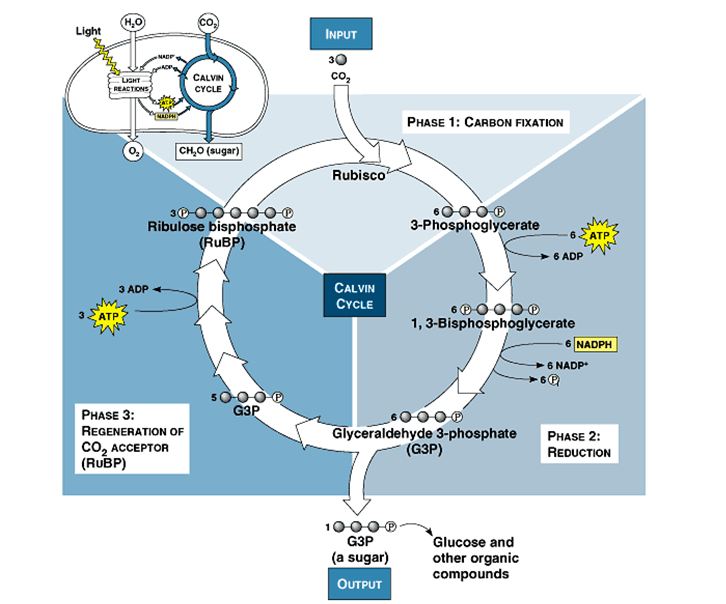
Dr. V.:  Ja… green plants take ze CO2 out of ze air, it combines mit water in ze presence of light, and you get oxygen und sugar, which de plants use for energy.  It is very slow, though, mit a bunch of steps in ze middle.  No big BOOM! at ze end. 

Peerless: So, you’re saying that Schmidt and Orlov might take a while and a lot of steps to mesh as a pair?

Dr. V.:  Ve heff a zaying in chemistry…”you can’t rush ze Calvin cycle.” 

Peerless:  So let’s get to the bottom line here, Dr. V.  The Caps have made big changes on their two top lines, have a new third defensive pair.  Then there are the little changes that might not be so little, like giving Tom Wilson a bigger role to play.  Is that going to be too much for the Caps to manage and still contend for a Stanley Cup.

Dr. V.:  Ah!  Zat is a gut question, and I need to introduce ze idea of a “catalyst.”  You know what zat is, right?

Peerless: A substance that changes the rate of a reaction without undergoing any permanent changes of its own.

Dr. V.:  Eggggzellent!!  You should come to ze Institute!

Peerless: Thanks, Doc, but I haven’t taken a chemistry class in a long time.  Now, about the catalyst?

Dr. V.:  Look it is ziss vay.  Ziss ist ze first time zince 2011 zat ze Kepitals have had ze same head coach in a normal training camp two years in a row.

Peerless: Bruce Boudreau

Dr. V.: Correct.  Now, mit one year of Barry Trotz and how he wants to coach a team, mit all the strategies and ze drills and ze philosophy under ze players’ belts, you would think things would go more smoothly and more quickly ze second time around, ja?  And ze players, you would think they would be more comfortable mit ze stability of having a coach and ze zystems in place two full years in a row, no?  And, the Kepitals made ze player changes in ze summer, when zey heff ze time to work zem into ze schemes in ze lab….uh, training camp.  Not on ze fly during ze season at trading deadline.  Zat hasn’t gone zo good for ze Caps lately, has it?

Peerless: I think I see your point.  I guess what I am hearing is that you think the Capitals have taken their actions this summer in such a way as to improve the chemistry, or at least give it an opportunity to complete all the necessary reactions.

Dr. V.: Zat ist correct.  It ist like working through an experiment.  You can’t skip ze steps or rush zem.  You heff to haff a plan and be careful and rigorous in eggsecuting it.  Ze Kepitals haff done zat very well…so far.

Peerless: So far?

Dr. V.: Ja…you don’t play these games in ze lab.  You play zem on ze ice, and who knows for sure vut vill happen out there.  But I vill say, ze 2015-2016 team looks like ze club’s best chance ever to finally win a Stanley Cup.

Peerless:  Really?

Dr. V.: Hey, vood I lie to you?  I’m a zcientist!


Tuesday, October 06, 2015

Washington Capitals: Five Questions for 2015-2016, Part IV

The fourth of the questions we are looking at is one that the Washington Capitals did not have to address often last season, or at least as often as some teams. 


The 2014-2015 season was a relatively healthy one for the Washington Capitals.  The team dressed a total of 29 skaters over the course of the season, well below the average across the league of 32 skaters employed over the course of the season.  Only six teams used fewer skaters in 2014-2015.  The following chart illustrates the range of skaters employed across the league in 2014-2015 (ranked by number of skaters; note: total is greater than the number of skaters participating in league play due to players skating for two or more teams as a result of trades/other transactions):


What is more, the Capitals were able to ice a consistent lineup.  Only two teams had more players appearing in 70 or more games than the 13 who skated for Washington (the New York Islanders and Los Angeles Kings, with 14 apiece), and no team had more skaters appear in all 82 games than the Caps (seven).

Already, though, health is an issue for the team.  Every team gets nicked up along the way through a season, and some clubs go into the postseason with players that are playing through injuries that would otherwise put them on the bench.  What that means is that an off-season is often time for those issues to be addressed, for players to undergo treatment or surgery, and to rehabilitate themselves.  Sometimes, the issues carry over into the next season.

That is the case for the Capitals as they prepare for the season opener on Saturday.  When they take the ice, two important parts of the team could be on the bench with injuries that were dealt with over the summer.  Nicklas Backstrom is still rehabilitating his surgically repaired hip, which could keep him out of at least four games to open the season, and Brooks Orpik had wrist surgery last July that might or might not render him unavailable for the opening of the new season.  On top of that, Jay Beagle sustained what was called a “slight lower body injury (no doubt a new NHL injury category)” in the Caps’ last preseason game that Beagle might have played through had it been a regular season game,  but given this team’s history with “lower body injuries” of any sort, slight or otherwise (see: Mike Green, Brooks Laich, Tom Poti), those three words are always a bit ominous.

Health and success do seem to go hand in hand, to a point.  Looking at the last ten Stanley Cup champions, there seems to be no magic bullet as far as number of skaters employed is concerned.  The ten clubs averaged 30 skaters in their respective championship years, ranging from 25 (the Los Angeles Kings in 2013-2014) to 36 (the Pittsburgh Penguins in 2008-2009).

Having a significant number of skaters dress for all 82 games appears helpful.  Six of the ten champions had four or more skaters appear in all 82 games, the Anaheim Ducks of 2006-2007 having eight such skaters.

However, there does seem to be something to the idea of dressing at the very least a consistent lineup.  In no instance did any of the Cup winners have fewer than 11 skaters dress for at least 70 games, averaging 12.2 per club (a range of 11, by five winners, to the 14 that Chicago had in 2009-2010 and Los Angeles had in 2013-2014).


Note: Chicago in 2012-2013 prorated to 41 games as proportional to 70 game threshold, 48 games for full season

It is hard not to think of things like injuries snowballing.  It is as if bad luck takes over a team and chokes the life out of it.  The Columbus Blue Jackets and the Pittsburgh Penguins were two clubs that were hit by an avalanche last season, and we don’t mean the hockey team from Denver.  One club was able to deal with it and reach the postseason, but it was a somewhat damaged team that could not advance past the first round.  The other club – one that reached the postseason the previous year for just the second time in franchise history – did not have the depth to overcome the plague of injuries. 

Capitals fans might remember the 1998-1999 season, the one immediately following their Stanley Cup final year, when the club lost 511 man games to injury.  We will be rubbing a rabbit’s foot, knocking on wood, and keeping a four-leaf clover in our wallet to guard against the Caps or their fans having to endure a season such as that.  Because, if the Caps are healthy, the rest will take care of itself.


Monday, October 05, 2015

Washington Capitals: Five Questions for 2015-2016, Part III

In looking at five questions about the 2015-2016 edition of the Washington Capitals, we turn to a sometimes overlooked part of the club…the bottom six forwards.


A lot of attention has been paid to the additions the Washington Capitals made to bolster the right side of their top-six forwards – T.J. Oshie and Justin Williams. However, the Caps did lose Joel Ward and Eric Fehr in free agency this past summer, and it raises the question of what the bottom six forwards will look like and whether they can be a contributing force in the season ahead.

It was an unsettled enough function that the Caps held what amounted to a casting call during the preseason.  Derek Roy, a player with almost 800 games of regular season and playoff experience, was brought to camp on a professional try out.  Sean Collins, who played parts (small ones) of three seasons with the Columbus Blue Jackets, was signed as a free agent in July and given a long look in training camp. Chris Bourque was signed to a contract in July for what would be his third tour with the organization.  Liam O’Brien, who surprised many by making the Caps roster for Opening Night in 2014-2015, was in camp competing for a spot.  Chandler Stephenson, a 2012 draft pick and with barely a season at Hershey, went deep into training camp.  Chris Brown, who appeared in five games with the club last season, was making his way through camp until a hand injury set him back for what is expected to be several weeks.  Stanislav Galiev, a 2010 third-round draft pick who appeared in his first two NHL games late last season, was getting a shot to make the club on a permanent basis.

This was in addition to returnees Jay Beagle, Michael Latta,  who might be expected to get third or fourth line minutes, and Brooks Laich and Jason Chimera, who might at one time gotten second line minutes but are likely to find homes on one of the bottom two lines.

Then there is the matter of the depth the Caps have at scoring line forward.  There are seven players fighting for six spots.  Suffice it to say that it would seem likely that when Nicklas Backstrom returns to the lineup, then one of Marcus Johansson or Andre Burakovsky is going to be on the third line.

As we write this, Roy has been released from his try out.  Of the others, O’Brien, Bourque, and Stephenson will start the year in Hershey.  Brown is injured and will be out for some time yet.  This leaves Collins and Galiev as the 13th and 14th forwards for the moment, although with Backstrom still out for at least the first four games, one of them appears slotted to get a sweater for Opening Night. 

Compare last season’s bottom six to what might be this season’s group, once the Caps are healthy at forward (for purposes of discussion...no lines are ever permanent):


A third line of Brooks Laich (or Jason Chimera; they might be interchangeable at this point), Andre Burakovsky, and Tom Wilson would be something of a departure from a conventional checking/shut-down line pitted against, where possible, an opponent’s top line.  It would be a third scoring line, potentially.  The difficulty, at first blush, is that Burakovsky would have spent so little time with any of these three players at 5-on-5 last season (combined, about 112 minutes).  And while Burakovsky’s Corsi-for with Laich and Wilson were more than adequate (56.8 percent and 60.9 percent, respectively; numbers from stats.hockeyanalysis.com), there is too little experience there to draw much in the way of conclusions. 

There is an odd upside to a line such as this, though.  Both Burakovsky and Wilson are at the beginning of their respective development curves.  The best that might be said for such a line is that it could be better late than it is early.  They could start the season as the youngest players on the roster (20 and 21 years old, respectively).  There is room for improvement, room for them to grow together.  This applies perhaps more to Wilson, who has not yet demonstrated that he can be a contributor in the offensive end of the rink.  The improvement angle would be the optimistic view for this line.

Then there is Laich, should he get the nod to take the left side of such a line.  If there is a player who has something to prove this season, it might be Laich.  Hounded by injuries the last three seasons, he is very much removed from the solid even strength and power play contributor he was five or six years ago.  He has as many goals over the last three seasons combined (16) as he recorded in 2011-2012.  While he remains versatile, capable of playing any of the three forward positions, he needs to demonstrate productivity.

For Jason Chimera, his motivation is a bit more straightforward.  He is in the second year of a two-year deal with the Caps and is looking at unrestricted free agency at the end of the season.  A productive campaign would add to his earning potential in what could be his last NHL contract (he could be the oldest skater on the team this season at age 35).

Laich and Chimera being suited for either the third or fourth line on the left side brings us to the other two positions on the fourth line.  Jay Beagle will eventually center this line, in all likelihood, once Nicklas Backstrom returns as the top line center and moves everyone else down a rung on the ladder.  He is coming off a career year of offense (10-10-20), is a superior faceoff performer (54.7 percent in 254 career games), and he has a new contract to show for it (three years/$5.25 million).  Those are the kinds of things that can lead to a letdown if the player gets caught up in trying to do too much to maintain the career best production and/or justify the contract.

On the right side of this line could be Michael Latta.  There really isn’t a delicate way to say this, but Latta is something of a liability in the offensive end.  He has one goal on 30 shots in 70 games.  No forward played in 70 or more games and took 30 or fewer shots except for Latta.  He does try to contribute in other ways, mostly as an “energy” player (the sort who annoys and agitates, and who can and will drop the gloves when circumstances dictate). 

In Beagle and Latta, the Caps have something akin to the days when Boyd Gordon and Matt Bradley played for the club.  Gordon was a very good defensive player and was adept in the faceoff circle, Bradley was a heart-and-soul guy who led with his chin (and other parts of his face) on a lot of nights.  Beagle is perhaps a better offensive player than Gordon, who has never had a 10-goal season (but he does have three 20-plus point years), while Latta is not as competent as Bradley in the offensive zone (37 goals in 427 games with the Caps).

If, however, the third line is going to be as much, if not more of a scoring line than one might associate with a third line, then the fourth line might be expected to pick up more of the defensive burden as opposed to being merely an “energy” line.  This might argue more for Laich playing on this line, he being a superior possession player and probably a better pure defender than Chimera.

This is the point where we bring up the depth forwards.  To start the season it would appear as if those spots would go to Sean Collins and Stanislav Galiev.  Neither player has much in the way of NHL experience (Collins has 19 games over three seasons, Galiev had two games last year).  And they arrive at their roster spots from very different directions in training camp.  Of Collins, head coach Barry Trotz likened him to departed winger Joel Ward and said:
“He’s not a big body. He’s not going to blow you away with blazing speed or these fantastic hands or anything, but if you watch him closely, he will make you like him as a coach, because he does a lot of those things that are hard to do all the time.” 

On the other hand, Trotz was not as sanguine about Galiev’s progress and situation with the club before the team’s last two preseason games:
“There’s no question, he hasn’t stood out right now at all to me.  He’s got to play better... We’re pretty well out of time. We’ll make a decision on him very shortly.” 

The decision, for now, appears to keep him in Washington, but his stay might be limited to how long Nicklas Backstrom is on the shelf.

The third and fourth lines are, and will be an issue as the season gets underway.  The Caps are dealing with a retooled third line and an uncertain fourth line.  One can see a path for each improving over the course of the season in what might be unconventional roles.  On the other hand, one can just as easily see either (or both) being a substantial drag on the Caps’ performance.  This is a question that is not going to be answered in a week, in a month, or even by New Years.  It had better have an answer by the spring, though, of all this talk of the Caps going deep in the postseason might be just that.


In Search of the Humble Post Game Prize

Teams in the National Hockey League seem to be wedded to the idea of bestowing the player of the game a symbol of his effort and achievement when the club finishes a win and repairs to the friendly confines of the locker room.  In years past, the Capitals have used the hard hat...


And, they have employed the "Honest Abe" stove pipe hat and beard as a fitting symbol...


As the 2015-2016 season is about to begin, let us humbly offer a suggestion for this season.  A chunk of granite, the unpretentious rock...


Why?  Well, it's simple, really.  To recognize one as being solid as a rock, of being rock hard in the face of opposition.  To distinguish one as being strong and impermeable, the rock on which victory is built.  To be steady as a rock, hard as a rock.  To put opponents between a rock and a hard place.

For years, Caps fans have been "rocking the red."  Now is the time to pay honor to the rock by using it to honor the player of the game.  Who knows, it might come in handy when Caps fans are "rockin' 'til the break of dawn," should the team win the prize they all covet next spring.

Sunday, October 04, 2015

Washington Capitals: Five Questions for 2015-2016, Part II

Our second big question for this season concerns whether the Washington Capitals can successfully fill critical spots from within as players depart.


One of the things that characterizes the Chicago Blackhawks in their current era of excellence is their ability to remake themselves.  That has been a product of necessity, salary cap limits and players who were coming up for raises after successful campaigns requiring the parting of ways with the Hawks.

It happened after the 2010 Cup-winning season, when the Blackhawks lost seven players – Kris Versteeg, Dustin Byfuglien, Ben Eager, Brent Sopel, Colin Fraser, Andrew Ladd, and Antti Niemi – generally as a concession to their cap situation.  Chicago won again in 2013, but then they lost Michael Frolik, Dave Bolland, and Viktor Stalberg.  After winning a third Cup in six seasons last spring, the Blackhawks find themselves in the same situation now, having lost Brandon Saad and Patrick Sharp.

What the Blackhawks have not done is tamper with their core – Jonathan Toews, Patrick Kane, Duncan Keith.  They have managed to fill in around that core very effectively.  Much of that has come from within, either new players sliding into the lineup or players assuming larger roles – Andrew Shaw, Teuvo Teravainen, Niklas Hjalmarsson, Bryan Bickell, Marcus Kruger among them.

The Washington Capitals have not had nearly the success enjoyed by the Blackhawks, but they, too, are in the position of having to fill spots left open by players moving off to other teams.  Three players come to mind here, all Capitals draft picks – John Carlson, Andre Burakovsky, and Tom Wilson.  All are expected to assume expanded roles or fill in for departed players.

John Carlson has been slowly incorporating more responsibility into his game for a few years now.  Last season he was the team leader in minutes per game and finished the season among the best in the NHL in a number of statistical categories.  He was the team leader in even strength ice time per game and shorthanded ice time per game among defensemen for the Caps.  The one area in which he had not yet assumed the clear number one role on the blueline was quarterback on the power play. 

Now, with Mike Green departing for the greener pastures of Red Wing hockey (three-year/$18 million contract with Detroit), Carlson is going to get his shot at quarterbacking what has been the league’s best power play over the last three years (24.9 percent overall, first-ranked in two of those seasons, second by one one-hundredth of a percent in the other).  Carlson was a more efficient player than Green last season in producing power play points (16 in 142 minutes versus 17 in 199 minutes for Green), but he is going to get the best penalty killers that opponents can offer, looking to deny his teeing up Alex Ovechkin for one-timers from the left wing circle.  Assuming this responsibility means that for John Carlson, the job of number one defenseman is his job in full now.

Precocious rookie.  In Chicago, that role went to Teuvo Teravainen last season.  A former 18th overall draft pick in 2012, he went 4-5-9 in 34 games with the Blackhawks in the regular season, then followed it up with four goals and ten points in 18 post season games.  For the Caps, it was Andre Burakovsky.  The former 23rd overall pick in the 2013 draft surprised many by making the parent club out of training camp and scoring the team’s first goal of the season on his way to a 9-13-22 season in 53 games.  He followed that up with a pair of goals and three points in 11 postseason games. 

This season, Burakovsky is expected to assume a more expansive role.  He seems targeted for either the second line left wing or the third line center, although it seems likely he will be the second line center until Nicklas Backstrom returns to the lineup, and Evgeny Kuznetsov slides down a rung in the middle.

At times, it was hard to remember that Burakovsky was a 19-year old rookie.  He had a fine start to the season, and his postseason was uncommon for one as young as he was.  Then again, he was assigned to Hershey six times last season, the last time to participate in the Bears’ postseason run.  Not that he played a lot in Hershey (13 regular season games and one playoff game).  Many of the reassignments were “paper” transactions of a short term nature, but this year he will be expected to appear in more than the 53 games in which he played for the Caps last season.  But, let us keep in mind, too, that he is still just a 20-year old.  In the post 2004-2005 lockout era, 19 forwards in their 20-year old year recorded 50 or more points, less than two a year and never more than three in any one season.  If there are Caps fans out there thinking Burakovsky is going to be one of them, he is swimming upstream against recent history.  But he should be a significant contributor.  It is likely he will have to be for the Caps to be successful.

Tom Wilson is not your average 16th overall draft pick.  He is one of five players in the post 2004-2005 lockout era to record at least 300 penalty minutes in his first two seasons.  None of the other four were drafted higher than the third round or 73rd overall.  On the other hand, he is fifth in his 2012 draft class in games played (149), 14th in goals scored (7), and 11th in points (27), all rankings above his selection point (16th overall).

This season, Wilson could amend the definition of “power” forward as it applies to him.  Although the club obtained T.J. Oshie and Justin Williams to address perceived weaknesses on the right side of the forward squad, Wilson could slide into the third-line slot formerly occupied by Joel Ward, now of the San Jose Sharks.  In that position, there is going to be less emphasis on the power of his fists (26 fighting majors in two seasons) and more on muscling his way into scoring areas and improving his point production.

The age thing applies to Wilson as much as it does to Burakovsky.  He will be entering his 21-year old age year with the Caps.  In the last ten seasons, 14 right wingers have appeared in 70 or more games and recorded 30 or more points in their 21-year old year.  It would be a stretch for Wilson to make it 15, but making progress as an all-around contributor is the object of this season for Wilson.

In a salary-capped world, the ability of a team to bring new players into roles left open by players departing for better compensation is a key to sustained success.  The Chicago Blackhawks have perfected this technique in the last half-dozen seasons.  If the Capitals are to replicate the success of the Blackhawks, they are going to need to have players assume more responsible roles and make bigger contributions.  Key to that will be how John Carlson, Andre Burakovsky, and Tom Wilson – all former first-round draft picks by the club – improve on their performance to date.

Washington Capitals: Five Questions for 2015-2016, Part I

As Opening Night of the 2015-2016 NHL season approaches, there are questions, questions, questions about the Washington Capitals.  We are going to take a look at five that we have.
 

Can the Capitals manage expectations?

If you peruse the preseason prognostifying, the consensus appears to be that the Capitals are a conference-final caliber team.  Only the Tampa Bay Lightning are consistently ranked ahead of the Caps in the Eastern Conference.  The last time the Capitals were this much a darling of the hockey intelligentsia was in 2010.  For example, looking at the NHL.com staff predictions for 2010, nine of 15 of the prognosticators picked the Caps to win it all.  They famously did not. 

That 2010 team was still young; the team’s core was still 25 years of age or younger.  This year’s team does not have quite the same burden of expectations as that 2010 team, but it is one that is perhaps better equipped to deal with the level of expectations they will bear.  First, it is an older, more experienced team.  Sure, they have endured a number of playoff disappointments since that early 2010 early exit against Montreal, but with age comes a certain maturity and sense of urgency.  Alex Ovechkin turned 30 years of age a few weeks ago.  Nicklas Backstrom will turn 28 in November.  Karl Alzner just turned 27. These are players squarely in their prime.  Put another way, they can see the top of their respective career summits from here, and there might not be as many chances in front of them to win a championship as might have been the case three or four years ago.

Second, this team is more balanced than perhaps any team in this era of Capitals hockey.  It is not as top-heavy an offense/forward oriented team as the 2010 edition.  The defensive top-four of Alzner, John Carlson, Matt Niskanen, and Brooks Orpik has 2,179 games of regular season and an additional 271 games of postseason experience.  We talked about the importance of an experienced top-four on defense back before that 2009-2010 season, particularly in its relationship to a Cup winner.  Part of what such experience provides is a sense of perspective, in being able to manage expectations to keep from too-high highs and too-low lows.

Third, the Caps have their best goaltender since Olaf Kolzig was in his prime.  Braden Holtby is certainly better than any goaltender the Caps have employed in the current, post 2004-2005 lockout era.  Having such goaltending is not sufficient to winning a Stanley Cup (see: “Lundqvist, Henrik”).  But it could be a necessary condition.  Of the last ten Stanley Cup Champions, seven of the number one goaltenders in those postseasons posted a save percentage of .920 or greater in the postseason, four of those times a save percentage of .930 or greater.  In those same ten postseasons, those same number one goaltenders posted goals against averages of less than 2.00 five times. 

In three postseasons, Braden Holtby has been over .920 in save percentage all three years (over .930 twice, including a league best .944 last spring).  He has been under 2.00 in goals against average twice, including a league best 1.71 last spring.  Among goalies appearing in at least 20 playoff games over the past four postseasons, Holtby and Tuukka Rask are the only ones with a combined goals against average of less than 2.00 (both at 1.92) and a save percentage over .930 (both at .936).  What is more, he has been consistently good.  He ranks fourth over the last four postseasons in games in which he allowed fewer than two goals (15), playing barely half (34) of the games played by the three goalies ahead of him (Lundqvist, Corey Crawford, and Jonathan Quick).  He is fifth in games in which he posted a save percentage over .930. 

Fourth, the Caps were more aggressive in addressing shortcomings as an off-season task than as a trading deadline effort.  This is perhaps the biggest difference between the regime of George McPhee as general manager and that of Brian MacLellan to date.  In each of the last two off-seasons, MacLellan aggressively filled holes, last season by signing free agent defensemen Matt Niskanen and Brooks Orpik, this summer by trading for T.J. Oshie and signing free agent Justin Williams to shore up a weak right side among the forwards.  What is more, those four players bring more than 3,000 regular season and playoff games of experience into this season.  Orpik and Niskanen had a full slate of regular season games to integrate themselves into the Caps system; Oshie and Williams will have that opportunity this season. 

Maturity, urgency, balance, goaltending and defense, experience, assimilation.  All contribute to a club that could be, if not the most talented from a skills standpoint to withstand the rigors of a long regular season and a grueling playoff tournament, then perhaps the most prepared team in the history of this franchise to face the level of expectations set forth for them.