Sunday, September 29, 2013

Washington Capitals 2013-2014 Previews -- A Six-Pack

The NHL provides that teams may carry 23 players on their rosters.  And as we head into the regular season there are going to be players on the edge who might be sent down to juniors (Tom Wilson), to the AHL (Tyson Strachan, Dmitry Orlov, Tomas Kundratek), or…well, we just don’t know (Connor Carrick).  Do we have anything to say about these guys?  You bet we do…

Tom Wilson

It would be hard to think that any player this September gave (and still gives) Washington Capitals management more cause to think than Tom Wilson.  The 16th overall pick in the 2012 entry draft is, even at just 19 years of age, the mix of size, skill, and edginess that has been lacking on the club since, well, a long time.  The problem for the Caps is that Wilson has no AHL option.  It is either a roster spot with the parent club or back to Plymouth in the Ontario Hockey League, in accordance with an agreement between the NHL and the umbrella Canadian Hockey League organization that provides that a player not having reached his 20th birthday or having played in four years in major junior hockey is not eligible to play in minor professional hockey leagues (AHL or ECHL).  Wilson has completed three years with the Plymouth Whalers. 

Scoring three goals and participating in two fights in his five preseason games has made things tougher on the Caps’ front office, but complicating the matter is payroll.  The Caps have $665,705 in cap room at the moment for 22 roster spots (13 forwards, seven defensemen, two goaltenders; source: capgeek.com).  Given who would be expected to be retained by the club, if the Caps choose to keep 13 forwards, one would have to be moved to make room for Wilson on the roster.  Even if they were inclined to carry 14 forwards, Wilson’s $1.3 million cap hit would push the club over, making necessary a move in that case.

By the time you read this, the matter might already be settled, since NHL clubs have to get down to rosters of no more than 23 players and under the $64.3 million salary cap by 5:00 p.m. (Eastern) on Monday.  Wilson has been getting a long hard look in preseason, and we suspect that the club is trying to clear a roster space to allow him to stay with the club.  However, with a lot of other clubs in the position of having to trim their rosters to get to the 23-man limit on Monday, it could prove to be a hard chore.  That the Caps have an option with Wilson to return him to juniors means that they could be less inclined to holding what amounts to a “garage sale” sort of deal that does not return value.  We think that come Monday, Wilson will be back in Plymouth.  But we are not very confident about that forecast.

Tomas Kundratek

It was a mild surprise that Tomas Kundratek was placed on waivers on September 25th.  If there was a time to do it, though, that was the time.  With clubs heading into the last weekend of the preseason and having their own waiver decisions to make, their making a waiver claim on a third-pair defenseman was a chance the Caps were willing to take.  It worked.  Kundratek cleared waivers.

That might not be the end of it, though.  Kundratek was 1-6-7 in 25 games last season for the Caps before suffering a leg injury in a game against the Carolina Hurricanes on March 14th that ended his season.  He certainly has a salary cap-friendly hit of only $550,000, but is in a bit of a logjam with the other right-handed defensemen on the roster (Mike Green, John Carlson, Steve Oleksy, Tyson Strachan.

Although he did surprise somewhat with his offense last season, his possession numbers left a bit to be desired.  His 5-on-5 Corsi/on-ice was sixth among eight defensemen playing in at least 20 games for the Caps (only John Erskine and Jeff Schultz were worse), and his Corsi relative (on-ice less off-ice value) was also sixth among the eight defensement. His PDO (sum of team on-ice shooting and save percentages) was second worst among the defensemen (only Jeff Schultz had a lower value).  He compiled these numbers while having the highest share of offensive zone starts (52.0 percent) among the defensemen playing in at least 20 games.

Still, he could serve as one of those guys who is on a short list for call-up in the event of injury or poor play.

Projection: 13 games, 1-3-4, minus-3

Tyson Strachan

Much of what we just wrote about Tomas Kundratek also applies to Tyson Strachan.  He was placed on waivers on September 28th.  At this writing we do not know if he cleared or was claimed.  We suspect, though, that he will go unclaimed and follow Kundratek to Hershey for the same reasons.

There are, however, differences in their situations.  In Strachan’s case, he is not an especially gifted offensive player (he has one goal in 120 career games).  And, he has no history with the Caps, having spent his NHL career in St. Louis and Florida.  Last year with the Panthers, his possession numbers were alright (by Florida standards), ranked in the middle of the pack among Panther defensemen in his Corsi numbers at 5-on-5.  However, despite 54.2 percent offensive zone starts, his PDO value was second worst among seven Florida defensemen playing in at least 20 games.  In fact, only six of 210 defensemen in the league playing in at least 20 games had a lower value at 5-on-5 than his 953.

He is likely to be a fill-in of a different type than Kundratek.  Where Kundratek is more of a “skill” based defenseman, Strachan has more of a physical edge.  He could be an option in the event a John Erskine goes down (and remember, Erskine has played in more than 55 games only once in seven seasons in Washington).  His size (6’3”, 215) and edge (12 fights in 120 NHL games) makes him more suited to that role.

Projection: 12 games, 0-1-1, minus-2

Connor Carrick

Can’t say we saw this one coming.  Two years with the U.S. national development team was enough for the Caps to take a flyer on Connor Carrick in the fifth round of the 2012 entry draft.  Last year he skated in Canadian major junior hockey (Plymouth Whalers) and had a respectable 12-32-44, plus-27 scoring line in 68 games, plus 18 points in 15 post-season games.  He came to Caps development camp last July and impressed.  He was invited to training camp and apparently really impressed.  As of this writing he is still on the roster (he played 22-plus minutes in the Caps 4-3 overtime loss to Chicago on Saturday night).

He almost certainly will not make the parent roster this season, but he has played himself into a tough decision for the front office.  It is not on the order of the decision the Caps have to make concerning Carrick’s junior teammate Tom Wilson, but they have to ponder whether Carrick would be served better by a return to Plymouth or an assignment to Hershey.

In five preseason games he was 1-4-5, plus-1 (cbssports.com keeps pre-season statistics).  His five points put him in a tie for 13th among Eastern Conference skaters and tied for fifth among defensemen.  Only 20 players in the league have more pre-season ice time at this writing (he leads the Caps in total ice time).  He is getting a long look and doing the most with the opportunity.

Dmitry Orlov

Dmitry is something of the lost prospect.  In 2011-2012 he was among the rookie defenseman leaders in assists and points, and developed a local reputation as being quite fond of the hip check.  Last year his season might have been a victim of the lockout that delayed the start of the season.  Without having had the opportunity to start the season in Washington with the Caps, he was skating with the Hershey Bears in a December 6th game at Verizon Center against the Norfolk Admirals when he suffered a concussion, likely the product of a hit he sustained early in the first period.

Orlov played in only 31 games for the Bears and only five for the Capitals last season, stopping his development in its tracks.  Instead of growing into a second pair role with the club, he is fighting for a roster spot in pre-season 2013.  At the moment he appears to be on the outside looking in, at least in terms of cracking the starting lineup.  John Erskine, Jack Hillen, and Steve Oleksy would appear to have the inside on the last three starting spots on defense.  Hillen and Oleksy have the added bonus of carrying lower salary cap hits than Orlov ($900,000)

The not-too-subtle hint about Orlov is that he needs to develop a more rounded two-way game.   The upside for him is that as a left-handed defenseman he faces less congestion for a spot on the ice than he would if he was right-handed.  For the moment Orlov seems to be the odd-man out in the Caps’ blue line plans, but the grind of an 82-game season suggests he will get some time to show he is recovered and back on an upward development path.

Projection:  20 games, 2-4-6, minus-2

Philipp Grubauer

Philipp Grubauer’s march through the Capitals development path has been unremarkable by its consistency and steadiness.  Drafted in 2010 (fourth round, 112th overall), a year in the Ontario Hockey League (Kingston Frontenacs, a year in the ECHL (South Carolina Stingrays), and last year splitting time between the Reading Royals in the ECHL and the Hershey Bears in the AHL.  He even found time for a cup o’ coffee with the Caps last year – two games in which he faced 59 shots in 84 minutes.  That works out to 42 shots per 60 minutes.  Well, he didn’t lack for work in his short stay.

Grubauer got about a game’s worth of total minutes in the pre-season before being sent back down to Hershey (he stopped 19 of 20 shots in his pre-season debut with the Bears, a 6-1 win over Wilkes-Barre/Scranton).  His 2.57 GAA and .923 save percentage in limited duty seems about where he ought to be, with a full year in Hershey to come as part of his apprenticeship.  There is no rush in bringing Grubauer along, and our expectation is that absent injury, he will not see action for the Caps this season.

Last season the Caps dressed 28 skaters and three goaltenders.  That means that there very well could be players dressing for the Caps this season in addition to those we covered in our previews.  That’s part of what makes each NHL season interesting, to see who gets a chance that you might not have expected when the season started. 


Saturday, September 28, 2013

Washington Capitals 2013-2014 Previews -- Goaltenders: Braden Holtby

Braden Holtby

Theme: “Now this is not the end. It is not even the beginning of the end. But it is, perhaps, the end of the beginning.”
-- Winston Churchill


Talk about having had two different seasons.  When Braden Holtby stumbled out of the gate at the delayed start of the 2012-2013 season, Caps fans might have had the thought, “it was nice while it lasted.”  Holtby, who started his career with a 2.02 goals against average and .929 save percentage in his first 21 career regular season games, went 3-4-0, 4.04, .870 in his first seven appearances of the new season.  Yeah, there was a shutout in there, but c’mon.  It was against Florida, a team that won two of their previous nine games in regulation going into that game. 

He looked lost…quite literally.  He was spending as much time trying to find his position in the crease as in tracking and turning away pucks.  Then he started to turn things around.  It was not a flip of a switch, by any means.  It was a three-game stretch in which he allowed eight goals but faced a ton of shots in doing so (107).  He even lost two of those games.  But stopping almost 93 percent of the shots he faced in those games marked a turning point for Holtby.

Only three times in his last 29 appearances of the season (including that three-game turning point) did Holtby allow more than three goals in an appearance.  In those 29 appearances he was 20-8-1, 2.26, .930, with three shutouts.

Overall, Holtby won 23 games in 36 appearances and posted a save percentage of .920 overall.  How many goalies in the last 20 years, age 23 or younger, posted a season with at least 20 wins and a .920 save percentage or better?  Six: Tuukka Rask, Andrew Raycroft, Carey Price (twice), Henrik Lundqvist, James Reimer, and Holtby.  If you are looking at that .930 save percentage in his last 29 appearances and ask yourself how many goalies age 23 or younger over the past 20 years posted at least 20 wins and at least a .930 save percentage in a single season, the answer is “Rask.”  That’s it.

Fearless’ Take…

Let’s extend that conversation for a moment.  Holtby has been in the league for three seasons now, having appeared in 57 games.  In that time seven different goaltenders have been named finalists for the Vezina Trophy.  How does Holtby compare to that group in terms of their respective first 57 appearances in the NHL:


Holtby has more wins and a higher save percentage than any of them, and he is second in goals against average to Henrik Lundqvist (parenthetically, it seems odd that 57 games into his career Holtby has yet to post a “no-decision” in an appearance).  And, he is consistent.  He has those spells when he looks ordinary (or worse), but he avoids losing streaks.  He has not lost three decisions in a row since his third, fourth, and fifth career games in 2010.  And, he has not yet lost three consecutive decisions in regulation in his brief career.  He’s a battler.

Cheerless’ Take…

He does have his moments.  Eighteen goals allowed in his first four appearances in 2012-2013.  Eight in his first two appearances in 2011-2012.  Eleven in three appearances in November 2010.  And it is not as if that is limited to the NHL.  Last year he had a 12 goals in four games stretch in November, 14 in four games in November 2011 and another 14 in four game stretch in December 2011, 19 in five games in February/March 2011.  Then there was the five goals on the first 20 shots he faced in Game 7 of the playoffs last spring.  Then there is that whole wandering thing...


The Big Question… The Next Big Step or the Next Big Stumble?

Braden Holtby’s performance over his first three years in the league compares more than favorably with similar game tracks of goalies who would be Vezina finalists the past three years.  Then again, there are goalies who start fast and fall quickly – Steve Mason won 33 games and a Calder Trophy in Columbus in 2008-2009, but he is 67-81-20 since and is trying to reassemble his career in Philadelphia.  Andrew Raycroft won a Calder Trophy in 2004, but he went 78-87-17 with five teams over the next seven years and played last year in Italy.  Then there is the Caps’ own Jim Carey, a first team all-rookie team goalie in 1995 and a Vezina Trophy winner in 1996.  Three years later, after going 26-35-4 with three different teams, he was out of hockey altogether.

Holtby has been prepared well, at least in the opinion of the Capitals’ brain trust.  As Capitals general manager George McPhee put it, "We think we've developed [Holtby] properly.  We've taken our time. We think he can really have a big year for us."  One could agree with that, given that Holtby served a diligent apprenticeship in South Carolina (12 games) and Hershey (107 games) before assuming the number one duties on a full-time basis last season with the Caps.

None of that, though, is a reliable indicator of future growth, and one area in which he has to break through involves this: 17-20.  That is his win-loss record in the post-season with South Carolina, Hershey, and Washington.  He has played well in those settings (a .912 save percentage with South Carolina in one post-season series, a .931 save percentage in 21 post-season games in Washington), but “great” goalies not only play well, they win at that level of play.  It is, then, still an open question whether the 2013-2014 season represents the next big step for Holtby or, well, something else.

In the end…

Hockey is a young man’s game.  This might be true more for skaters than for goaltenders.  Here’s the thing.  Cam Ward won a Stanley Cup at the age of 21 in 2006.  Since then, the average age of Stanley Cup-winning goaltenders is 29.  The youngest of that group is Marc-Andre Fleury who was 24 years old in 2009 (Holtby just turned 24). 

However, few goaltenders in the last 20 years have compiled an early-career resume as impressive as Holtby’s.  In the last 20 years only five goalies have played in at least 50 games in their first three seasons, had a goals against average of 2.39 or lower and a save percentage of .920 or better: Niklas Backstrom, Roman Cechmanek, Marty Turco, Tuukka Rask, and Holtby.  On the other hand, how many Stanley Cups were won by those other four goalies?  If you said “none,” you are correct.

Holtby has, by any measure, done everything he needs to do as a developing goaltender.  However, now he is the man.  And he has to do more.  He is at the end of the beginning.

Projection: 59 games, 32-18-6, 2.29, .924, 4 shutouts


Photo: Joel Auerbach/Getty Images North America


Washington Capitals 2013-2014 Previews -- Goaltenders: Michal Neuvirth

Michal Neuvirth

Theme: “Comeback is a good word, man.”
-- Mickey Rourke


Until goaltender Michal Neuvirth finished 4-5-2 with the Washington Capitals in the 2012-2013 season, he had not finished under .500 for a season since he was 6-7-0 with the South Carolina Stingrays in 2008-2009.  That was his only sub-.500 season as a goalie at any level in his career, going back to Canadian junior hockey… again, until last season.

It was a season that started with hope.  Despite his being injured late in the 2011-2012 season and yielding his starting goaltending job to Braden Holtby for the playoffs, the expectation was that he would battle Holtby for the starting job out of the gate in the 2012-2013 season.

Nice thought, except the gate did not open on time.  The Great Lockout of 2012-2013 meant no training camp for evaluation, no Opening Night start.  By the time the league got around to opening night in January, the die was cast.  Braden Holtby was the number one goalie, and Neuvirth, who might have thought he had fought off his principal goaltending challenge when Semyon Varlamov was traded to Colorado in July 2011, was on the bench for opening night of the 2012-2013 season. 

Not that Neuvirth did not get a look early.   In his first two games of the season, Holtby…what is the technical term here?  Oh, yeah…stunk.  After allowing ten goals on 73 shots in his first two games (a .863 save percentage), Holtby was shown the bench, and Neuvirth took over with a chance to grab the job as number one goalie by the throat. 

It grabbed him, and not by the throat.  Maybe a bit lower.  In five consecutive starts he was 1-3-1, 2.98, .899.  It was hardly the stuff to inspire confidence that he was the guy.  Holtby returned for two more games and, well, was not very good (1-1-0, 4.00, ,860).  So…back to Neuvirth.  He got two more games.  Well, one and a half.  He lost a 3-2 decision to the Toronto Maple Leafs then was pulled in the 33rd minute of a 5-2- loss to Pittsburgh after allowing two goals on 11 shots. 

Through his first seven appearances he was 1-4-1 (one no-decision), 3.05, .889. That pretty much settled things.  Neuvirth was not going to be the number one goalie in 2013.  In fact, he would not make another appearance for another month, getting mop-up duty in relief of Holtby in a 4-1 loss to the New York Rangers on March 10th.

He did play respectably after that, getting five more appearances down the stretch in which he was 3-1-1, 2.39, .932.  The pecking order was set, though.  Holtby played superbly down the stretch, and Neuvirth proved a capable backup, but a backup, nonetheless.

Fearless’ Take…

Neuvirth has had a career that does not say “spectacular” as much as is says, “steely.”  Until last season he had experienced only one stretch of one season in which he had a sub-.900 save percentage (15 games with Oshawa in Canadian junior hockey in 2007-2008, .898).  He had only the one sub-.500 year in South Carolina.  He has a 34-15 record in the post season in the AHL and NHL with a 2.05 GAA, .924 save percentage and three shutouts.  Elite as a career ceiling might be a stretch, but his combination of technical soundness and a competitive streak hidden under a placid demeanor suggests that 2013 was something of an aberration in his career development.  Keep in mind, he still has only 130 games of NHL experience under his belt. 

Cheerless’ Take…

If you look at the 2009-2010 season – Neuvirth’s rookie season – and the goalies in that class, it’s pretty impressive.  Jimmy Howard, Tuukka Rask, Jonathan Bernier, Corey Crawford, Cory Schneider.  Neuvirth played in more games than Schneider, Crawford, and Bernier.  He had a better goals against average than Schneider and Crawford.  He had a better save percentage than Crawford and was only one point behind Schneider.  But that 2.75 goals against average and .914 save percentage doesn’t look a lot different than his career numbers (2.66, .910).  He has not made the progress we’d expect since then, and last season was a step back.

The Big Question… Can Neuvirth settle into a role as a backup in 2013-2014?

Neuvirth was the backup for the Caps last season, for all intents and purposes.  He just did not know that going into the season, he being in a competition with Braden Holtby for the number one spot.  This season, it’s different.  Absent injury or the utter collapse of his game, Holtby will be the starter this season, and Neuvirth will be the backup.  Everyone knows that going in.  Neuvirth has endured situations in which he was not the clear cut number one goalie, but it has been a while since his role as backup was this clearly defined.   If he cannot accept the role (and there are probably few NHL goaltenders his age who would “accept” such a role in their minds), can he adapt to it?

Even last season, Neuvirth’s appearances were not quite as intermittent of the sort one might expect in a backup goaltender.  Seven of his 13 appearances came in a nine-game span early in the year.  Then he played in three of four games in mid-March.  This year, with the league returning to an 82-game schedule, he stands to get somewhere between 25 and 35 appearances.  There will be slumps along the way that Holtby is likely to have to deal with, meaning Neuvirth might get more than a game in any given week.  But those instances, quite frankly, are not to be hoped for. 

So, the question is still out there… can Neuvirth settle into a role as a backup for 2013-2014?  There is little in his history to suggest a clear answer to that, but his ability to do just that – to give the Caps quality minutes when Holtby needs a breather – will be an important element on whether the Caps fight for a divisional title or struggle on the playoff bubble.

In the end…

There is a disturbing subtext to Michal Neuvirth’s numbers last season.  Against teams failing to make the playoffs he was 3-0-1, 2.21, .927.  On the other hand, against playoff teams he was 1-5-1, 3.01, .900.  That one win came in April against a Montreal Canadiens team that stumbled to a 4-6-0 finish.  He is going to have to step up his production against stiffer competition in what is likely a tougher division in which the Caps play this season.   His history says that he has it in him to rise to that challenge.  The difference this season is that he has to do it on an intermittent basis.  If he can thrive in that role, it would represent a comeback of sorts, and that is, as we have seen, a good word.

Projection: 30 games, 13-9-4, 2.61, .913


Photo: Justin K. Aller/Getty Images North America

Washington Capitals 2013-2014 Previews -- Defensemen: Steve Oleksy

Steve Oleksy

Theme:
“You go back Jack do it again
Wheel turnin' 'round and 'round
You go back Jack do it again”
-- Walter Becker, Donald Fagen (Steely Dan)


If you look up the word “whirlwind” in the dictionary, you will find that it can mean “a confused rush,” or “something that involves many quickly changing events.”  The last three seasons for Washington Capitals defenseman Steve Oleksy might qualify.  In the 2010-2011 season Oleksy split time between the Idaho Steelheads of the ECHL and the Lake Erie Monsters of the NHL, teams in cities separated by more than 2,100 miles.  In the 2011-2012 season he split time between Idaho and the Bridgeport Sound Tigers, teams in towns separated by almost 2,600 miles.

In July 2012, Oleksy signed a free agent contract with the Hershey Bears.  With the National Hockey League in lockout lockdown, the Bears could get full and utter attention by the Capitals’ brain trust in player evaluation.  Oleksy made an impression.  In 55 games he recorded two goals and a dozen assists. But it was another number that might have left a lasting impression: 151.  That was the number of penalty minutes Oleksy compiled in his 55 games.  He had 11 fights with the Bears, four of them against their arch-rival Wilkes-Barre/Scranton Penguins.  That brand of feistiness, along with his production from the blue line, earned him a three-year, two-way contract with the Caps in March.

Oleksy hardly found himself out of place with the big club.  In 28 games with the Caps he finished tied for third in total points (9), behind only Mike Green and John Carlson.  He was a plus-9, good for third among defensemen.  He was also third in total hits and was second on the club in fights.  His pugnacious character coupled with his surprising productivity made him a fan favorite in Washington.  Now…if he could just get a real player page at tsn.ca.

Fearless’ Take…

What sort of combination of productivity and feistiness did Oleksy bring last season?  If you look at all of the defensemen in the NHL, here is the complete list of defensemen who had at least nine points, finished plus-9 or better, and had three or more fights: Steve Oleksy.  That’s it.  In just 28 games.  And while the club as a whole finished the 2012-2013 season with a rush, the Caps were 19-8-1 in his 28 games with him in the lineup. 

His underlying numbers were pretty good, too.  His Corsi/on-ice per 60 minutes at 5-on-5 was second best among Caps defensemen playing in at least 20 games, and his relative Corsi (on-ice less off-ice) was best on the club among defensemen.  His PDO (sum of on ice team shooting percentage and save percentage) was third, just a few ticks behind John Erskine and Jack Hillen.  And for all the penalties he took (second among Caps defensemen in penalty minutes), he was the club’s best among defensemen at drawing penalties per 60 minutes (source: behindthenet.ca).

Cheerless’ Take…

Small sample size!  Small sample size!!  I heard that somewhere.  I don’t know what it means.  I just know that if I give our nephew Deerless a rifle and he shuts his eyes and plugs a 12-point buck, I ain’t gonna enter him in sharpshooting competitions right away.  I’m going to want to see him do it again.  Here’s what I’d be keeping in mind.  He had no points in his last six regular season games and only one assist in the seven-game playoff series against the New York Rangers.  He was 0-1-1, even in those last 13 games of the season.

The Big Question… What does Act II hold in store in “The Steve Oleksy Story?”

Steve Oleksy goes into the 2013-2014 season in somewhat rare company.  Since the 2004-2005 lockout, seven defensemen played in their second season in the NHL at the age of 28 or older (Oleksy will turn 28 next February):
  • Jan Hejda
  • Kent Huskins
  • Mark Streit
  • Jeff Finger
  • Marek Zidlicky
  • Deryk Engelland
  • Petteri Nummelin

It is not a group with a lot of common elements.  Hejda, like Oleksy, finished with a 1-8-9 scoring line in his first season in 39 games (Oleksy played in 28 games).  His 0.23 points per game in his first season dropped in his second season (0.16), but his career level (0.22 points per game over seven seasons) is consistent with that first season.  Huskins had a rather meager first season on a points per game basis (0.09 in 33 games), but raised that to 0.21 points per game over his seven seasons.  Finger is in the same ball park (0.29 points per game), as is Engelland (0.19 points per game).

Streit is the class of this group in terms of his offense. But what might be noteworthy in his instance is how his offense has dropped off over his last four seasons (from 0.77 points-per-game to 0.56 last season).  For our purposes here, his second season represented a more than doubling of his offensive productivity (from 0.23 points per game to 0.47).  Zidlicky and Nummelin are between the poles of this discussion (0.53 and 0.32 points per game over their respective careers).

What it suggests is that Oleksy might be more Hejda than Streit, more Huskins than Zidlicky.  The thing to note about those seven defensemen is that all of them played in at least 63 games in their second season with the exception of Nummelin, and his problem was missing 18 games to injuries in the 2006-2007 season.  If Oleksy follows in this mold, his second act might not be spectacular, but he would be a contributing player for the Caps.

In the end…

Last season, Steve Oleksy was the very definition of the “pleasant surprise.”  He came out of nowhere to get a sweater every night and provided some timely production with a splash of in-your-face.  He comes into this season penciled in as a third-pair defenseman on the right side.  There is bound to be some lingering apprehension among Caps fans along the lines of “was last year for real?” 

The thing is, though, Oleksy is not just a banger, and he is not just an offensive defenseman.  At least he was neither of the "just" last season.  He was something of both, giving the Caps a dimension they lacked.  Mike Green and John Carlson might, in a certain light, be looked at as “two-way” defensemen (certainly Carlson more than Green), but neither have a pronounced physical dimension to their games.  John Erskine is physical, but has little in terms of offensive development.  Karl Alzner is more of a defensive defenseman who relies on the geometries of the game more than a physical edge.  Jack Hillen is more of an offensive type.  Even going down the developmental chain, it is hard to find a defenseman who brings the combination of abilities Oleksy demonstrated last season.

The operative phrase in the last sentence of the previous paragraph is “last season.”  The object of the exercise this season is to strike a balance between building on that without stepping outside the comfort level of his performance capabilities – of trying to do too much while trying to prove his value to the club.  He’s done that.  He just needs to take last year’s productivity and do it again.

Projection: 65 games, 4-11-15, plus-8

Photo: Joel Auerbach/Getty Images North America

Friday, September 27, 2013

Countdown to Opening Night by the Elements: Number 4

Four left for Fearless’ fearless foray into the elements of the periodic table, which brings us to…


Beryllium

Beryllium is an element you are not likely to find in these parts…or any parts, actually, either on earth or in the universe.  Even its ultimate manufacture is a rare event.  It is produced in stars, but it exists only briefly, destroyed by subsequent nuclear fusion in a star’s interior.   By the time a star matures, perhaps only 15 percent of the beryllium it produced is still around.

Here on earth, beryllium exists only incombination with other elements in minerals, often in gemstones such as emeralds or aquamarine (forms of “beryl”).  It possesses an odd physical characteristic in that sound is conducted unusually fast in it, a product of its low density. 

Its history begins in Egypt when it had applications as the mineral “beryl.”  In first century Rome, Pliny the Elder made the link between beryl and emerald, noting their similarities.  Two centuries later, the Greeks made progress in producing artificial beryl. 

It would not be until the late 18th century, however, that more sophisticated chemical analysis could be performed on the substance.  Chemists in Germany and (yes) Sweden performed experiments on beryl and emerald that yielded consistent, if false, results.  They thought that they found silicates of aluminum, not a distinct element.

At the dawn of the 19th century, Louis-Nicolas Vauquelin subjected emerald to his own chemical analysis, dissolving aluminum hydroxide from emerald in an alkali solution.  He was left with a new earth that he named “glucine.”  Why?  Because he tasted it (idiot) and found it to be sweet, like “glucose” (sugar).  Martin Henirich Klaproth, one of the early experimenters who thought he had aluminum silicate, thought a better name would be “beryllina,” perhaps named for his daughter (no, not really).  Friedrich Wöhler put an end to the nonsense and finally called the new element “beryllium.”

Today, most applications for beryllium are military in nature, but it does nave limited commercial applications.  Those would include its use in x-ray applications. However, because of the need for extremely pure samples, it is very expensive.  It is also used in particle research, its low density being a benefit to minimize interactions with particles that researchers wish to study. 

It has applications in rocketry, primarily in the manufacture of rocket nozzles, and in other aerospace sectors because of its structural stability.  One of the more exotic applications is in weather satellites where its low density and structural stability make it uniquely capable for use in large-area mirrors employed in such satellites.  It is an element in the manufacture of tools used in the disposal of explosive ordinance, since it is non-magnetic (many explosive devices have magnetic fuses).  Closer to home, or at least your home, it occasionally shows up in top-of-the-line audio speaker equipment.

What we have is an element that is short-lived, has some rather specialized uses, is found in gemstones, is characterized by high sound conductivity, and is low in density.  It sounds a bit like a player who might not have been around these parts long, had special talents on special teams, is slight of build, but who “conducts sound” by mouthing off on occasion to officials.

Beryllium… the “Mike Ribeiro” of the elements of the periodic table.

Thursday, September 26, 2013

Washington Capitals 2013-2014 Previews -- Defensemen: Jack Hillen

Jack Hillen

Theme: “The firm, the enduring, the simple, and the modest are near to virtue.”
-- Confucius


On July 3, 2012, free agent defenseman Jack Hillen signed a contract with the Washington Capitals to pay him $700,000 for the 2012-2013 season. The importance of the signing on that date probably ranked somewhere between Dallas signing Jaromir Jagr and Philadelphia signing Danny Syvret.

Nevertheless, Hillen was in the lineup on the night of January 19, 2013, Opening Night of the delayed 2012-2013 season. The record would show that he stepped onto the ice for his first shift as a Capital at the 6:24 mark of the first period, lining up for a faceoff just after an Eric Brewer goal that gave the Tampa Bay Lightning a 1-0 lead.

Five shifts later, his evening was over, courtesy of a check by Vincent Lecavalier behind the Capitals’ net that caught Hillen awkwardly just as he was releasing a pass along the end wall. Hillen was crumpled into the end boards shoulder first. Lecavalier was not penalized on the play. However, 11:43 into his first game as a Cap, Hillen was out. He would miss 25 games and would not return until March 16th against Boston.

Hillen played the last 22 games of the 2012-2013 season and went 3-6-9, plus-8 over that span. Given that Hillen received largely third pair minutes and little in the way of special teams minutes (about a minute per game combined in power play and shorthanded ice time), it was a respectable scoring line.

That scoring line was even more impressive if one considers that in his first 12 games back from injury he managed to record only a single assist. Over his last ten games he was 3-5-8, plus-8, and had points in six of those ten games.

When all was said and done, he set career bests in goals and points per game (not counting the 2007-2008 season in which he played in two games). And, whether coincidence or his contributions as a depth defender, the Caps were 16-4-2 with Hillen in the lineup after he returned from his shoulder injury.

Fearless’ Take…

Hillen, either despite of or as a product of his being something of an undersized defenseman, is a meat and potatoes sort, not given to flash, but for keeping things simple. Among Caps defensemen appearing in at least 20 games last season he led the club in Corsi/on-ice, was second in Corsi relative (the difference between his on-ice and off-ice values), tied for the team lead in PDO (sum of on-ice team shooting and save percentages), was second on the team in differential between penalties drawn and penalties taken, and had the second best on-ice goals against average at 5-on-5 for the Caps (source: behindthenet.ca).

Cheerless’ Take…

Let me toss five numbers out there… 40, 69, 64, 55, 23. Those are the number of games Hillen played in each of his five full seasons. He has missed at least 45 games to injury over those five years (source: tsn.ca) for a variety of problems: foot, broken jaw, concussion, shoulder, and shoulder again. Durability has not been his hallmark. And whatever arbitrary standard you apply to scoring taakeaways and giveaways, his ratio of the former to the latter last year was not so good (2:13).

The Big Question… Is Jack Hillen a 50-game defenseman?

This could be an important question for the Caps because of the problems they have after their top three players at this position. When you get past Mike Green, John Carlson, and Karl Alzner, the drop off in talent and effectiveness is a bit precipitous. It is compounded by the fact that both John Erskine (the nominal “fourth” defenseman) and Hillen last year combined to play in only 53 games (roughly a full season’s worth in the shortened, 48-game season). And these are not anomalies. Erskine has played in more than 60 games in a season once in his 11 year career; Hillen has done so twice in five full seasons (though never as many as 70 games).

Hillen has averaged 50 games played in his five full NHL seasons. If that is what you can pencil him in for, then another defenseman – Dmitry Orlov, Tyson Starachan, Tomas Kundratek…someone – is going to have to fill that slot for a significant portion of the season.

In the end…

Jack Hillen is probably a better defenseman than he might be given credit for by Caps fans, perhaps a product of a low-key, keep it simple style. But there are durability issues that present serious problems for a club whose 4/5/6 defensemen might end up having to be filled by 7/8/9...or more defensemen over the course of the season. This is not, by itself, unusual. The Caps dressed 12 defensemen in 48 games last season.  Injuries happen, players are benched, kids in the minors do well enough to deserve a look.

Hillen’s problem in being able to stay in the lineup has not been a succession of nicks and dings, but rather having to miss big chunks of time. Nine games to a broken jaw in 2010… eight games to a concussion the next season… 25 games to a shoulder injury last season. He is one piece of a brittle and shallow port side of the defense, once you get past Karl Alzner on the top pair.  This is not something a team with playoff aspirations like the Caps can leave to a hope and a prayer that he will be a dependable and, more important, durable defenseman on the third pairing.

Projection:  55 games, 4-7-11, plus-4

Photo:  Jared Wickerham/Getty Images North America

Wednesday, September 25, 2013

Washington Capitals 2013-2014 Previews -- Defensemen: Mike Green

Mike Green 

Theme:  "Give a man health and a course to steer, and he'll never stop to trouble about whether he's happy or not.”
-- George Bernard Shaw


“I think it’s time to become a dangerous player again.” Thus spoke Washington Capitals defenseman Mike Green last week.  The “again” reference reflects the fact that Green was the most dangerous offensive force from the blue line in the NHL until a series of injuries limited him to 116 of 212 regular season games over the past three seasons.  Before that, Green played in 225 of 246 regular season games and composed a 68-137-205 scoring line (a 25-50-75 average per 82 games) from 2007-2008 through 2009-2010.

Last season, Green came back…sort of.  In January 2012 Green underwent sports hernia surgery to “eliminate the unknown” with respect to his recurring groin problems.  Green returned in February of the 2011-2012 season but did not record a goal in his last 22 regular season games (0-1-1).  He had two in 14 playoff games that season (2-2-4), but was clearly not all the way back.

An off season to recuperate in full was supposed to solve the remaining problems, but even with the delayed start to the 2012-2013 season, Green missed 13 of the Caps’ first 29 games with a “lower body injury.”  He dressed for the last 19 games of the season for Washington, going 10-9-19.  He was a terror on the power play, going 4-7-11 on the man advantage over those last 19 games.  The four power play goals (his total for the season) would have put him in the top 50 defensemen in total goals scored, a feat made more impressive by the fact that he did it in only those 19 games to end the season.

As it was, Green ended the 2012-2013 season leading all defensemen in total goals – 12, a total that represented a 28-goal pace per 82 games.  He had a 43-goal pace over those last 19 games, which brought memories of 2008-2009 (31 goals in 68 games) to mind among Caps fans.  That is the line of a dangerous player.

Fearless’ Take…

As valuable and productive as Alex Ovechkin was last season, getting Green back to good health in the last 19 games last season was the push the Caps needed.  The Caps were 7-0-1 in games in which Green scored at least one goal (he had two against Carolina and Boston, both wins).  The Caps were 11-1-1 in games in which he recorded at least one point.

And before you think Green fattened up against the Southeast Division, he was 5-3-8 in 14 games against teams in the division, 7-11-18 in 21 games against teams outside the Southeast.

Even with all the games Green missed over the past three seasons, no defenseman has more goals scored than Green since the 2007-2008 season, and he is the active leader in points (second to retired Detroit Red Wings defenseman Nicklas Lidstrom).  Zdeno Chara is second among active defensemen in points to Green, but he has played in 104 more regular season games over that span of time than Green.

Cheerless’ Take…

For what it’s worth, Mike Green was tied for 34th among defensemen in even strength points last season.  He had only four even strength assists.  That was a neighborhood that included T.J. Brennan, Eric Gryba, and Simon Depres.

Maybe it was related, but among 210 defensemen playing at least 20 games last season, Green was 125th in Corsi/on-ice at 5-on-5.  And his Corsi/on-ice relative to Corsi/off-ice was 134th among that group.  What it meant was that his goals-for/on-ice per 60 minutes at 5-on-5 ranked only 133rd among those 210 defensemen, and his plus-minus/60 minutes at 5-on-5 ranked 136th.

The Big Question… Is Mike Green healthy, or his he “healthy?”

It is September.  Mike Green has not played a regular season game yet.  He is healthy… fresh as a daisy (figuratively speaking).  So are dozens of other players at this time of year.  But the question is still out on whether he is “healthy,” as in “can he sustain himself to play in 70 or more games?”

This is an important question to settle as the season unfolds for this reason.  When Mike Green plays, the Caps win more often than not.  In the three years covering the 2007-2008 through 2009-2010 season the Caps won 133 of 225 games played by Green (50.2 percent).  These were his most durable years.  In the last three seasons the Caps won 66 of the 116 games he played (56.9 percent).  Even in less frequent appearances, Green’s presence coincided with success.

More to the point, over the last six seasons the Caps have won 73.1 percent of all the regular season games in which Green has registered at least one point.  How many games Green dresses for this season is going to go a long way to answering the question of whether this team can reach the playoffs under their new divisional alignment.  Not that this should be any news to Caps fans.

In the end…

Last season was Green’s second best of his career on a goals-per-game basis.  He registered his third highest points-per-game.  And even with his injury problems over the past three years, here is something to consider.  Green played 116 games over that span, average 0.20 goals per game and 0.49 points per game.  How other many defensemen played in at least that many games and had those averages or better for goals and points?  Three – Dustin Byfuglien, Erik Karlsson, and Shea Weber.  If not clearly the best offensive defenseman he was over that 2007-2008 through 2009-2010 period, he is part of a short list of such defensemen even now.

This is what makes the upcoming season so tantalizing.  If he has put his injury plague behind him, Green is not so far removed from being one of, if not the most prolific point producers from the blue line in the NHL.  If he was to play in 70 games and produce as he did the last three seasons, he would finish with a scoring line of 14-20-34.  If, however, he was to return to that level of production he enjoyed from 2007-2008 through 2009-2010, a 70-game season would mean a scoring line of 21-43-64.  We suspect his production will fall between those boundaries.  It would still make him plenty dangerous.

Projection: 72 games, 17-32-49, plus-4

Photo: Elsa/Getty Images North America

Countdown to Opening Night by the Elements: Number 6

Fearless has gone on with this series almost as long as some legislators filibuster.  But now he is down to a six-pack of elements…


Carbon

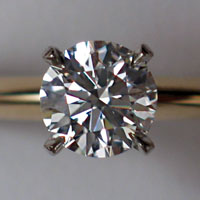
The discovery of carbon dates back about six millennia, to the Egyptians and Sumerians in the manufacture of bronze.  On particular form of carbon – diamonds – were known of more than four millennia ago in China.  It might have been known of and used as charcoal in the earliest of human civilizations.

Since those early beginnings carbon has occupied a central place in human social, industrial and biological evolution.  Beginning with the latter, carbon is the basis for all organic life on this planet.  This is a product of its unique ability to form long-chains binding with other carbon atoms, and to its unique chemical bond characteristics.  It employs these characteristics to form simple sugars, complex carbohydrates, alcohols, fats, amino acids (from which proteins assemble), nucleic acids, adenosine triphosphate (the most important chemical you probably have never heard of – it is the basis for energy transfer in all living cells), and a variety of more exotic organic compounds.

It is an element that remains constant in volume on earth, meaning that when carbon is a part of physical processes, it must come from somewhere (or something) and be deposited somewhere else (or in something else).  This “carbon cycle” of inputs and outputs is reflected in such processes as carbon respiration in plants and in consumption and metabolism of nutrients.

Which brings us to its industrial evolution.  Its discovery as an element starts in 1722 with René Antoine Ferchault de Réaumur (“Grande Toni,” for short) transforming iron into steel by introducing an intermediary element.  That element would be carbon.   Fifty years later Antoine Lavoisier (“Petit Toni” for short) demonstrated that diamond is a form of carbon.  Just two years after that, Carl Wilhelm Scheele (who for some reason was nicknamed, “Swedish Toni”) showed that graphite was yet another form of carbon.  It was left to Lavoisier to settle on the name for the element, identifying it as “carbon” in a chemical textbook he published in 1789.

Having been identified as occurring in a number of different forms was not enough.  It was found to be the essential element of crude oil and comprising the structural element of plants (through cellulose, an extremely long chain carbon-based molecule).  Given these forms and sources, it became the basis for a huge variety of applications, including: steel manufacture, “lead” pencils (in which the “lead” is primarily graphite), dry batteries, paint and ink, food preparation (charcoal grilling), structural carbon fiber, electroplating, nuclear power generation (as a neutron moderator in reactors), and plastics.

It is one of the rare elements that has incorporated itself in the social evolution of man, primarily in its diamond form.  They are a girl’s best friend, they serve as the basis for commitment for couples, they serve to signal significant anniversaries.

We have an element that is the centerpiece of living processes, an element that is central to the inputs and outputs of biology.  It is an element that takes many forms and has many applications, limited only it seems by the imagination of those searching for applications.  It has an important place in the social fabric of human history.  It is not unlike a figure who occupies a central role in the life of a hockey team, one concerned with the inputs and outputs of the on-ice product, one whose imagination can mold its many forms into a variety of strategies and approaches for winning hockey.

Carbon…the “Adam Oates” of the elements of the periodic table.

Tonight! A Special Event!! (well, maybe)

Monday, September 23, 2013

Countdown to Opening Night by the Elements: Number 7

Only one week to Opening Night, which means Fearless is down to number 7 in the elements of the period table.  Who might the Washington Capital we find here?...


Nitrogen

At what scientists refer to as “standard temperature and pressure (pretty much what you live in),” nitrogen is virtually inert.  It does not do much, does not react with much.  It is, however, a very important element for how it behaves as an element.  It binds with itself to form the molecule “N2.”  This bond between the two atoms of nitrogen is extremely strong, difficult to break in the process of chemical reactions.  That strong bond reflects a large amount of stored energy, which is released when compounds containing nitrogen are subjected to combustion or, in the case of organic materials, decay.  Nitrogen occurs in all organisms, primarily in proteins and nucleic acids, essential building blocks of life processes and structures.

Some of the usual suspects (especially those involved in the discovery of oxygen) were present for the discovery of nitrogen – Carl Wilhelm Scheele, Joseph Priestly, Antoine Laurent Lavoisier.  But it was Daniel Rutherford, a Scottish chemist, who is credited with discovering it.  The problem, it turned out, was naming the element.  Rutherford called it “fixed air.”  Priestly referred to it as “phlogisticated air.”  Lavoisier called it “mephitic air,” then “azote,” from the Greek word “azotos,” meaning “lifeless.”

The word “nitrogen” would not come for almost another 20 years, and we have Jean-Antoine Chaptal to thank for it.  His thinking was logical in a “chemistry” sense… “nitre” (another name for potassium nitrate, or “salt peter”), from which nitric acid could be produced, in which “nitrogen” was an essential element.  “Nitrogen” was picked as a combination of “nitre” and the Greek word “genes,” meaning forming…”nitre forming,” get it?

Nitrogen has a fair number of practical applications.  For instance, it is used as a food preservative or in fertilizers.  It has applications in electronics and in incandescent light bulbs.  It can be used to reduce fire hazards in environments with fuels present.  It can be a replacement for air in filling tires for high-performance applications (automotive or aircraft, generally).  It can be used to pressurize kegs of beer or ale.  It is also found in the explosives nitroglycerin and trinitrotoluene (TNT).  It is found in “super glue” and in Kevlar.  In its liquid form it is used as a refrigerant and can be used for some medical procedures (removing warts, for example). 

Nitrogen is an element that binds strongly with itself, brings with it a strong binding energy, can be found in a wide variety of applications, including: agriculture, fire management, food industries, medicine, refrigeration, and explosives.  Compounds containing nitrogen are very versatile and practical.  It might not have a flashy analog among hockey players, but it does reflect a certain essential and useful character.  Maybe not a top-line center, but a second-line version who contributes the necessary offense and responsible defense to make a good team a contender.

Nitrogen…the “Mikhail Grabovski” of the elements of the periodic table.

Washington Capitals 2013-2014 Previews -- Defensemen: John Erskine

John Erskine

Theme: “My range is limited.”
-- Bob Dylan


If you saw the movie, “Titanic,” you will know that the plot focused on the plight of Jack Dawson and Rose DeWitt Bukater, star-crossed lovers on a doomed ship.  Only briefly during the film did the moviegoer see scenes of men caked in soot, shoveling coal into the boilers powering the ship.  But without those guys doing that hard work, the ship would not have been going anywhere, and there would have been no story of the unsinkable ship, no movie.

That’s a bit of a roundabout way of saying that John Erskine is that specie of defenseman who does a lot of the hard, the dirty work and doesn’t figure prominently in the credits.  Doing that hard work is testimony to Erskine’s persistence and determination to carve out a role as an NHL player.  Despite enduring eight separate occasions in which he missed five or more games to injury as a member of the Washington Capitals, he is one of 148 defensemen to play in at least 300 games over the 2006-2007 to 2012-2013 period (coinciding with his career with the Capitals).  That sounds like a big number until you think of it in terms of there being 30 NHL teams and that it covers a seven-year period.

In 2012-2013 Erskine had a deceptively effective year in the context of his role.  He is by no means thought to be a significant contributor on offense, but he finished the year with his best goals-per-game level in his seven years with the Caps.  His points per game was surpassed only by his 2006-2007 season (his first with Washington). His shooting percentage was his best as a Cap, and his shots on goal per game was a career best.  He set a career best for average ice time per game.  And he did this comfortably within the boundaries of the rules.  His penalty minutes per game was a career low.

Let’s just not get carried away with that though.  A 3-3-6 scoring line in 30 games is not evidence of being Washington’s answer to Erik Karlsson.  Erskine’s role is more of the “serve and protect” variety.  Sometimes, that means engaging in the pugilistic arts.  And say what you will about Erskine, he is a stand-up guy.  When he is called upon or calls upon himself to play that role, he doesn’t do it against sunflowers.  Over the last three season Erskine has been involved in 11 bouts.  Here is the fight card (most recent first):

  • Shawn Thornton (114 NHL regular season fights)
  • George Parros (149)
  • Bracken Kearns (49 AHL fights)
  • Arron Asham (96)
  • Chris Thorburn (68)
  • Jared Boll (125)
  • Andy Sutton (46)
  • Mike Rupp (79)
  • Ryan Malone (38)
  • Eric Boulton (132)
  • Milan Lucic (45)

Sometimes, Jack and Rose get to cavort on the promenade deck and on the Grand Staircase because the John Erskine’s of the world are below decks doing a lot of hard and, at times, necessary work.

Fearless’ Take…

How many Capitals defensemen had a higher PDO (sum of on-ice team shooting and team save percentages) at 5-on-5 last season than John Erskine?  None (minimum 20 games played).  How many had fewer offensive zone start shares at 5-on-5.  None.  Who had a better goals against-on ice/60 minutes at 5-on-5?  None.  The Caps were 21-7-2 in games in which Erskine dressed, 6-11-1 in games he did not.

Cheerless’ Take…

There were 201 defensemen who played in at least 20 games last year.  Only 19 of them had worse Corsi/on-ice numbers at 5-on-5.  In seven seasons with the Caps he has lost 127 games to injury or illness.  If you look at his salary cap hit, age and contract duration, his comparables look like Shane O’Brien, Cory Sarich, Michal Roszival, and Jordan Leopold.  Is his a good deal in that neighborhood?

The Big Question… Does John Erskine have the wherewithal to take on second pair minutes effectively?

There are two parts to that question – his own effectiveness and his effect on his partner’s.  Erskine averaged 18:27 in total ice time per game last season, a personal best in his 11-season career.  Given the narrative that attaches to Erskine (that he isn’t quick enough or well-rounded enough to take on a heavy minute load), you would think that high-volume minutes he logs puts the club in a bad situation.  Last year, the Caps were 7-2-0 in games in which Erskine recorded at least 20 minutes of ice time, and both losses were of the one-goal variety (3-2 to Ottawa and 2-1 to the Rangers, both on the road).

However, there is the matter of Erskine being 33 years old with a history of injury.  He lost a quarter of last season to an upper body injury and has played only 58 percent of the regular season games scheduled over his seven seasons with the Caps.  One has to think that someone is going to be occupying that 4D spot a significant amount of the time in Erskine’s place (all other things being equal, like any further personnel moves).

In the end…

John Erskine seems to be one of those players for whom fans are always thinking of or looking for a replacement.  He lacks foot speed, he doesn’t have any offensive game, he’s…something.  There might have been some ominous signs about his game in last spring’s playoff loss to the New York Rangers.  The Rangers scored 14 even strength goals in the seven-game series.  Erskine was on ice for eight of them.  He had the worst Corsi/on-ice value of any Capital defenseman and had the worst relative Corsi (his value on ice less his off-ice value).  And, regression being what it is, his PDO value (best among Caps defensemen during the regular season) was the second worst among defensemen in the playoffs for Washington.

Last season, Erskine skated more than 75 percent of his 5-on-5 time with John Carlson as his partner.  Whether that is how things will unfold this season is something that bears watching.  The Caps are not particularly settled once you get past their top three of Mike Green, Karl Alzner, and John Carlson.  Erskine, Jack Hillen, Steve Oleksy, Tomas Kundratek, and Dmitry Orlov could be competing for time on that second pair.  If Erskine wins the competition, it would seem likely that one of the others is going to have to fill in from time to time, perhaps significant minutes.  Because, while Erskine is one of those players who gives a supreme effort despite what others might view as shortcomings, the fruits of that effort often reveal themselves as time lost.  Being of limited range did not hurt Bob Dylan much.  For John Erskine, it might be a different story.

Projection: 59 games, 2-5-7, minus-3

Photo: Elsa/Getty Images North America


Countdown to Opening Night by the Elements: Number 8

We’re down to number 8 in Fearless’ look at the elements of the periodic table (he skipped number 9…Cheerless kept yammering about being anti-fluoridation or some such thing), which means we are down to…


Oxygen

Most of what you are is oxygen.  We do not mean in some metaphysical sense, that oxygen feeds your soul or something. No, most of what you are in the physical sense is oxygen, because it binds with hydrogen, producing water.  Water comprises most of the mass of living organisms.  It is that ubiquitous, that necessary for life processes.

When it is not cozying up to hydrogen to form water molecules, it exists naturally as a colorless, odorless, tasteless gas.  But if you think those qualities make it dull and lifeless, well…

It’s in the name.  “Oxygen” comes from two Greek words – “oxys,” meaning “acid,” and “genes,” meaning “producer.”  But we get ahead of ourselves a bit.  Way back in the 2nd century, BCE (“Before the Common Era”), a fellow by the name of Philo of Byzantium conducted what are thought to be the first experiments on the relationship of combustion to air.  Philo didn’t get things quite right, though, thinking that air was “converted” into fire. 

That’s okay, though.  A lot of experimenters got close to figuring out what was at the heart of combustion, but didn’t quite get there.  Leonardo da Vinci, Robert Boyle, John Mayow – all of them respected figures in the annals of science – came up short.  Then things kind of took a turn.  A couple of German chemists – Georg Ernst Stahl and J.J. Becher – came up with something called the “phlogiston” theory, an odd duck of an idea that held that combustible materials were of essentially two parts. A “phlogisticated substance (we don’t make this up, we just report it)” that contains “phlogiston,” which is released when burned, and a “dephlogisticate” that is left behind as a result of combustion.

You know what we need now, don’t you?  A Swede!  Yup… Carl Wilhelm Scheele came along in the 1770’s and produced oxygen by heating oxides of mercury.  Only he called it “fire air.” A little later, Joseph Priestly confirmed the finding in England.  Antoine Laurent Lavoisier tried to horn in on the discovery, but he didn’t “discover” this fire air until after Priestly told him how he did it.  What Lavoisier did, though, was establish that the “phlogiston” theory was a crock (it was really, as we all know, a planet in Romulan space), and – this was the important part – establish that air was a mixture of two gases, one of which was what he called “vital air.”  That name being kind of dull, Lavoisier renamed vital air “oxygen.”  In the end, Priestly gets the credit for discovering the element because he published his findings first in what is chemistry’s most famous example of “you snooze, you lose.”  Sorry, Carl Wilhelm.

So now we have this element; what is it good for?  Well, lots.  First, it is an extremely reactive element.  Even though oxygen occurs naturally as a gas, it gets used up in a variety of reactions and has to be replenished in the atmosphere by photosynthesis in plants.  It is essential to biological function, establishing itself in proteins, carbohydrates, fats, inorganic structural elements (teeth, bones), and it is critical to respiratory processes.

It has other applications as well.  For example, oxygen therapy or hyperbaric treatment.  It is used as a breathing gas in pressurized space suits and to assist breathing in low-pressure environments (mountain-climbing, for example).  It is used in steel manufacture and welding.  It is an important element in rocket fuel.

It can be hazardous due to its reactivity.  In high concentrations it can promote rapid combustion.  An oxygen source in close proximity to a fuel source can result in explosion if a triggering mechanism is present.  If liquid oxygen leaches into organic material (that containing carbon), the material can explode spontaneously if jostled or force is applied to it.

What we are left with is an element that is as essential as there is for life processes.  It is the predominant element in the air that we breathe.  It is highly reactive, a critical element in rocket fuel, one capable of contributing to combustion or, in special situations, detonation.  It sounds like a foundational player, one without whom success would be nearly impossible.  A player capable of generating spontaneous reactions from fans with his rushes up ice and his ability to score from almost anywhere.  And, having the atomic number “8,” we have…

Oxygen…the “Alex Ovechkin” of the elements of the periodic table.